Showing posts with label no artpunk contest. Show all posts

Thursday, 21 December 2023

[REVIEW] Skalbak Sneer: The Stronghold of Snow

Skalbak Sneer
[REVIEW] Skalbak Sneer: The Stronghold of Snow (2023)

by J. Blasso-Gieseke

Published by 21st Centaury Games.

Levels 5–7

Hello, and welcome to part EIGHT of **THE RECONQUISTA**, wherein entries of the scandalous No Artpunk Contest II (banned on Reddit but the top seller in the artpunk category on itch.io) are subjected to RIGHTEOUS JUDGEMENT. As previously, the contest focuses on excellence in old-school gaming: creativity, craft, and table utility. It also returns to the original old school movement in that it assumes good practices can be learned, practiced and mastered; and there are, in fact, good and bad ways of playing. Like last year, these reviews will assume the participants have achieved a basic level competence, and are striving to go forward from that point. One adventure, No Art Punks by Peter Mullen, shall be excluded since Peter is contributing cover and interior art for my various publications. With that said and solemnly declared, Deus Vult! Let Destiny prevail!

* * *

Tomb of Horrors is one of those modules which, before it was inevitably reduced to a safe geek in-joke, had its black legend, a reputation for pitiless cruelty and character destruction. Skalbak Sneer is Tomb of Horrors for combat-centric scenarios, billed “a tactical deathtrap dungeon”, and living up to every letter of that promise. This is an adventure that, if run correctly, will make a bitter almost-TPK feel like well-earned victory, and could be properly titled Death Frost Doom if that was not already taken by the LotFP classic.

Skalbak Sneer is what you get when a clan of snow dwarves, given centuries of time and work, has dedicated its efforts to building the perfect, unassailable fortress on a frosty mountain peak, with multiple lines of defences to draw in, then grind down and destroy potential invaders. They have been at it for a long time, they have developed battle plans and contingencies, and they expect visitors. If they can stick to their plans, the invaders will die, or be driven off with heavy losses. If the invaders can find ways to break the pattern, they might win (the dwarves’ limited reconnaissance abilities may be an edge, and leveraging pre-adventure information gathering another). The dwarves are limited in numbers with 24 defenders including some named NPCs, but they have resources, trained monsters, and an environment designed to their advantages. It uses psychological tricks to lead besiegers into a doom loop which allows them to be whittled down and dealt a killing blow without actually breaching the fortresses’ vulnerable interior. If the players follow this subtle railroad, it will lead them into an ignominious end. Similar designs have been attempted previously. The 2e supermodule Dragon Mountain did it with kobolds, although it relied on gimmicks and unfair rulings to make it work. Skalbak Sneer plays fair, it just plays to win, and does so effectively.

Welcome to My Death Machine!
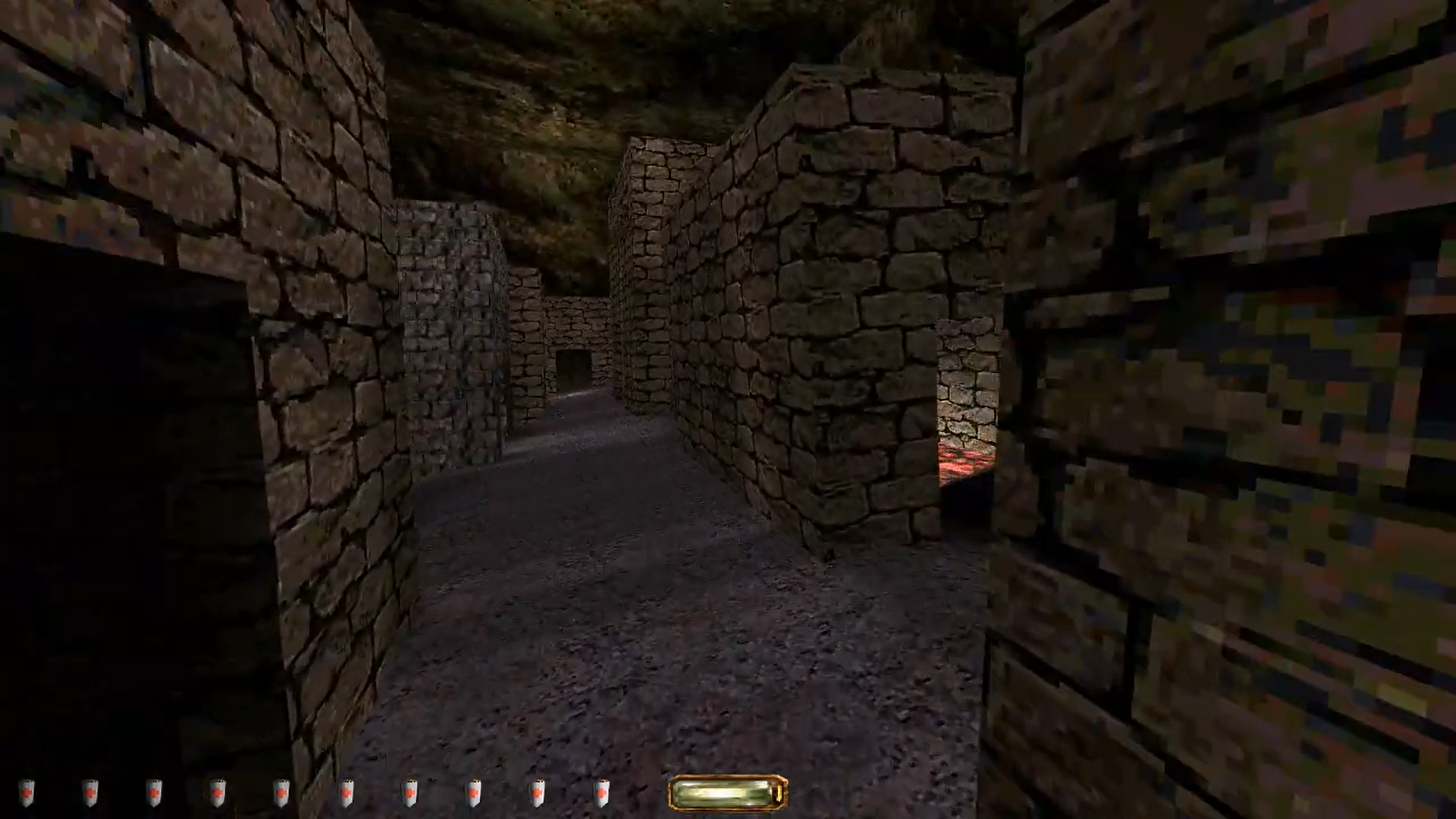
The module is basically a very tough tactical assault scenario set in a hostile environment, with dug-in opposition and formidable defences, Operation Overdwarf-style. Even the approach, a great winding stairway spiralling around the snowstorm-buffeted mountain peak, is a hostile place of natural hazards, and it gets worse from there. It is a hard scenario on both sides of the table. It will be tough for any party attempting it, but it also places heavy demands on the GM, who must understand how the snow dwarves’ deathtrap operates on multiple layers, then keep it in motion during play while adapting to the dynamics of play. You have fortifications, defenders, trained monsters, traps and other moving parts on top of each other, connected like a well-greased death machine. There is a lot of depth here on a complex map, which requires careful study. The presentation is very helpful – multiple colour-coded maps and alternate battle plans for alerted/surprised defenders are provided along with effective prose – but it is a lot. I don’t think it could be run practically on anything except a VTT.

In addition to the tactical play, the module has its strong, effective aesthetic. Much of the writing is very functional, with OSE-style barks like Switchback: Designed to force the party past the barred doors and vicious claws of the tundra troll, yeti, and polar bear.” or Spear-bolt holes: Allows Lieutenant Snull and the three Defenders in Attack Position 1 13 to attack through the walls.” Interspersed with this are bits of effective prose which give you an idea of a formidable, hostile place born of dwarven paranoia and madness, feeling more like a prepared grave for a death-obsessed clan than a place filled with life. It is cool, in multiple ways. “An arch of white icicles hang down like the fangs of some abominable hibernal beast. Beyond them, a yawning black gullet of Cimmerian darkness.” Or: “On each of the six sections of wall, a headless body, human, elf, orc, bugbear, hobgoblin and gnoll, hangs from chains in the shape of a Y. Between upraised arms, red stumps gape with frozen gore.” Or even: “A warm pipe running around the mountainside melts the surrounding snow. The musical sound of dripping water fills the air.” It is strong with expressive detail, Nibelungen-style tragic grandeur, and invocations of dwarven doom.

The rewards, if you gain them, are kingly. It is not sparse change, but enormous silver statues of stern dwarven warlords worth 10,000 gp each (and weighing 2,500 lbs too). The armoury of captured weapons, visible through arrow slits just beyond the entrance, is not just a few weapon racks: it is a room filled with a 3’ deep layer of war bounty from every conceivable destroyed invader, a grim warning to break the spirit of the attackers. The cooks and brewmasters, as much the masters of their craft as the garrison, shall die defending their precious trade secrets with their last breath. There is no quarter asked or given, only wintery death.

Skalbak Sneer is obviously not for everyone. It is not for players who aren’t heavily into tactical combat, formidable challenges, and being tested to the limits of their ability. The gulf between this module and the OSE fare you typically find on DrivethruRPG could not be wider. It is also focused on one particular thing, so if you don’t have an interest in it, it will feel fairly obsessive and one-note. That said, in its own genre, it is unmatched and perfect: a Masterpiece of Death.

This module does not credit its playtesters. This is a shame, because it would have been particularly interesting here to learn how they had fared during their assault.

Rating: ***** / *****

Thursday, 21 September 2023

[REVIEW] Alchymystyk Hoosegow

Alchymystyk Hoosegow
Alchymystyk Hoosegow (2023)

by Alex Zisch

Self-published

Level 7 “with some fatalities”

Hello, and welcome to part SEVEN of **THE RECONQUISTA**, wherein entries of the scandalous No Artpunk Contest II (banned on Reddit but the top seller in the artpunk category on itch.io) are subjected to RIGHTEOUS JUDGEMENT. As previously, the contest focuses on excellence in old-school gaming: creativity, craft, and table utility. It also returns to the original old school movement in that it assumes good practices can be learned, practiced and mastered; and there are, in fact, good and bad ways of playing. Like last year, these reviews will assume the participants have achieved a basic level competence, and are striving to go forward from that point. One adventure, No Art Punks by Peter Mullen, shall be excluded since Peter is contributing cover and interior art for my various publications. With that said and solemnly declared, Deus Vult! Let Destiny prevail!

* * *

High funhouse (as in “this guy must be high”) is kind of a lost art in adventure design. Puzzle-oriented, gameplay-heavy adventures with a strong emphasis on player skill and anachronistic comedic settings were the bread and butter of early D&D, but are rarely encountered in modern old-school, although they still exist in the forbidden pamphlets of the Scribes of Sparn, Unbalanced Dice Games, and sometimes Buddyscott Entertainment, Incorporated. Alchymystyk Hoosegow throws down the gauntlet and delivers high funhouse like no other.

What we get is a complex adventure site: an abandoned penitentiary converted into the workshop of an imprisoned alchemist, and left to the elements and various monsters. The first thing that strikes the reader is the dense, oddball writing: “The plateau backs up to the mountains where the talus contains an inky orifice. The mine opening has wagon-sized piles of clay soil spread nearby. A belching beehive-shaped smoke stack emerges from the ridge. (…) A species of Brobdignag proportions swarm the countryside. Mega-insects dart around chasing easy prey. They especially strike single file hikers, rock climbers and sleeping campers.” Or: “Clad in jade cloaks, two elves and two jackalweres (in human form) keep watch behind a parapet with a box of 500 arrows and 30 spears. A brass bell and cymbal can be gonged to raise the alarm. The jackalweres and foxwoman communicate in their alignment tongue with percussive signals. A trap door connects to the stair down”  The verbiage is strange and laden with four-dollar words (adjusted for inflation), but it is essential: you get a strong idea of places, personalities and situations. This allows the author to cram an enormous amount of content into the contest page count, even allowing for homemade art and permanent marker cartography that will win no beauty contest, but… well, it will win no beauty contest, and let’s leave it at that.

While the focus is on the alchemist’s two-level “science bunker”, the surface area and three entry levels connected to the main deal are also described in broad strokes. The oddball energy is quickly unleashed. Giant cranes trudge through contaminated water, hunting for fish. A foxwoman rules a gaggle of charmed elven simps from her tower. Orc miners, generally peaceful, make deliveries for their mining operation. Margoyles collect rocks. There is just enough to kick the GM’s mind in a good direction, and let things develop. The entry levels are simplistic, sketched, but conceptually strong, each with a different dynamic. The foxwoman and her elves control the surface, and may offer a bargain to plunder the alchemist’s bunker. The orcs are working class guys just out to make a buck. A prison level is haunted by its jailers and inmates, and a furnace level is operated by salamanders creating expensive and bizarre ceramics in a fiery workshop inimical to human life. Each of these levels have their own logic and “game rules”, which the players must discover and exploit.

Periodic table-shaped rooms

The main deal, though, is the alchemist lair, a 36+12-room puzzle dungeon that serves as a storehouse for crazy alchemy-themed puzzle rooms. Lab equipment, transformation and potion miscibility experiments are offered in dazzling variety, from the relatively simple to the supremely complex. They are not really interconnected for the most part except by theme; they are isolated setpiece rooms to be messed with and exploited for profit. There is a lot of raw, playful creativity exploiting magic items and monsters, involving a strong theme of trickery. Tiny gnomic creatures stored in the vats of a bio-lab grow into giant spriggans to ambush their rescuers, while a bonsai is a disguised hangman tree patiently waiting for its prey. The puzzles are multi-layered. For example, a giant “pool table” has mastodon ivory balls worth 25 gp each, and the holes contain various liquids from port wine to cyanide and a living mustard jelly… the real treasure being the pool stick (a quarterstaff +1 with a chalky tip).

High art
Treasure is hidden carefully – potions disguised as paint pots, opening a secret door to even better treasures if sorted into the colours of the rainbow; a “floating” dunce cap that’s just sitting on top of an invisible iron flask, and so on. There is generous mundane and magical loot scattered around, if you can recognise and obtain it, but the best stuff tends to be behind the really fiendish puzzles. The traps are also hilariously deadly: consider an invisible inkwell on a writing desk, whose contents develops into a cloudkill spell if carelessly knocked over (with enough clues to give a hint to clever players and goad the foolhardy into making a deadly mistake). Of course, it is all very silly, veering into doggerel verses, groanworthy puns (“Meat the Beetles”, a book by Beer Brewbeck), and bizarre monster-NPCs. The greatest treasures are locked away on the lowest level, the alchemist’s treasury and vault – from pillars of pure gold to purple “Crown Royal” bags doubling as bags of holding, filled with 15,000 gp worth of golden dice. The difficulty curve also increases here, and both monsters and puzzles become formidable for the level range.

Alchymystyk Hoosegow is a very peculiar module occupying a very specific niche. Players will love it if you enjoy puzzle-solving and foiling the GM’s clever tricks in a place governed by cartoon/adventure game logic, and probably have a bad time if they prefer their games serious and more-or-less plausible. It is pure gamergaming, and does that very well. Hoosegow, by the way, means a jailhouse. No, I have never heard this one either. Were drugs involved in the creation of this adventure? Well…

This module credits its playtesters properly.

Rating: **** / *****

Sunday, 27 August 2023

[REVIEW] The Arcane Font of Hranadd-Zul

The Arcane Font
of Hranadd-Zuul

[REVIEW] The Arcane Font of Hranadd-Zul (2023)

by Daedalus

Self-published

Levels 2–4 “plus henchmen”

Hello, and welcome to part SIX of **THE RECONQUISTA**, wherein entries of the scandalous No Artpunk Contest II (banned on Reddit but the top seller in the artpunk category on itch.io) are subjected to RIGHTEOUS JUDGEMENT. As previously, the contest focuses on excellence in old-school gaming: creativity, craft, and table utility. It also returns to the original old school movement in that it assumes good practices can be learned, practiced and mastered; and there are, in fact, good and bad ways of playing. Like last year, these reviews will assume the participants have achieved a basic level competence, and are striving to go forward from that point. One adventure, No Art Punks by Peter Mullen, shall be excluded since Peter is contributing cover and interior art for my various publications. With that said and solemnly declared, Deus Vult! Let Destiny prevail!

* * *

A shrine known for a font that can grant magical powers for a price has become the focus of multiple competing groups. A magic-user, looking for the font’s energies, has been captivated by an evil plant monster, and serves it loyally. A band of grimlocks want to destroy the plant to worship the font as a manifestation of their god. A drow swordswoman has escaped here with a macguffin, and is pursued by a humanoid band who want her dead and the macguffin for themselves. The plant monster wants to enthrall and feed on more victims. This adventure uses a Dyson Logos map for a small dungeon adventure with 25 keyed areas, and lets loose the PCs among the factions.

Designed to be
messed with
The result is a sort of compendium of dungeon design good practices – a good mixture of encounter types, dungeon factions, non-linearity, monster tactics and a sense of wonder are all present. The locale is effective as a derelict place of mystery, with the statues of mysterious goddesses, scavengers which have moved in, and enigmatic puzzles you can mess with. This element of exploration and interaction is the adventure’s strongest point; whether it is messing with two magical mirrors that allow remote observation of key locales, stealing votive coins from the shrine of a death goddess, or exploring a laboratory setpiece, fun possibilities are presented and explored. It is not just single-function stuff – there are deeper layers of interaction and multiple possibilities to explore. There are enough environmental clues to help you along, but experimentation is tempting. You find a dead body, followed by a killer trap, and if you fall for it, it is richly deserved. The combat encounters offer good variety – there is a battle on a bridge spanning a larger cavern with a swarm of spiders dropping down from the ceiling that should warm every GM’s heart, a large grimlock gathering you can crash, or moving NPCs who are all different in their approach and threat type.

The faction conflict is central to the adventure, and it is impressively developed. There are opposing forces active in the area, they are on the move, and some of them also have bases to fall back to. This is quite outstanding, although as it tends to be, the dungeon is too small for this scope of intrigue. It is a grand play on a small stage – to work properly, it would need a place that would be three or more times as large, with generous empty space between the keyed areas.

Discovering the Ruined e-Thot Room
User-friendly presentation is just as prominent in The Arcane Font of Hranadd-Zul, and every trick from the book is on display. Room entries use multiple-level bullet-point formatting, underlining, cross-referencing, the works. NPC motivations are explained, terrain features described exactly, there is a table breaking down XP and treasure, and even a “what happens after the adventure” page. Paradoxically, this becomes the module’s largest flaw and the main obstacle to actually using it. Things are over-explained in the text – describing the presence of mundane doors where the map would suffice, or dwelling on insignificant dungeon clutter, or the motivations of a mimic and a carrion crawler (it is what you expect). Underlined keywords are too frequent, and don’t draw our eyes to the relevant bits. The effect of presenting the entire text in two-level bullet pontese is more disorienting than helpful – a lot of it would have worked better as plain text, with the bullet points reserved for relevant material. The point is not that these layout practices aren’t useful, but that their role should be supportive, not overwhelming. Here, it is overwhelming.

All things considered, this is a decent adventure, but it would be a better one if it had a larger sscope, and especially if it wasn’t trying to be so helpful. There are strong elements in the factions, the exploration, and the generally well-written text, but in the end, we return to the eternal wisdom: less is sometimes more. Would I use the adventure as it is? No. Would I be interested in a new one that fixed its issues but kept its good points? Definitely.

No playtesters are credited in this module.

Rating: *** / *****

Wednesday, 16 August 2023

[REVIEW] Ship of Fate

Trippy.
Ship of Fate (2023)

by Jonathan Becker

Self-published

Levels 10–14 “plus assorted henchmen”

Hello, and welcome to part FIVE of **THE RECONQUISTA**, wherein entries of the scandalous No Artpunk Contest II (banned on Reddit but the top seller in the artpunk category on itch.io) are subjected to RIGHTEOUS JUDGEMENT. As previously, the contest focuses on excellence in old-school gaming: creativity, craft, and table utility. It also returns to the original old school movement in that it assumes good practices can be learned, practiced and mastered; and there are, in fact, good and bad ways of playing. Like last year, these reviews will assume the participants have achieved a basic level competence, and are striving to go forward from that point. One adventure, No Art Punks by Peter Mullen, shall be excluded since Peter is contributing cover and interior art for my various publications. With that said and solemnly declared, Deus Vult! Let Destiny prevail!

* * *

Michael Moorcock’s psychedelic fantasies are the essential fodder for high-level D&D: cosmic struggles, godlike villains, heroes wielding magic beyond comprehension, and completely out-there set-pieces where the conventions of your usual fantasy world no longer apply. People have been adapting Moorcock’s stories ever since the beginning (Blackrazor is just one of the examples), and Ship of Fate follows in the footsteps of this tradition. The call of adventure reaches the greatest heroes of the realm to sail to another world and stop a pair of sorcerers messing with the very fabric of the multiverse. Are they up for the challenge? Find out in this high-level, tournament-style adventure.

Contrary to what you might expect from the premise, the titular Ship of Fate is not the focus; it is the vehicle that takes you there – sort of an extended briefing, although one with charismatic NPCs and a really swanky cosmic ship that can get you from anywhere to anywhere. Perhaps a longer, non-contest module could have something for the journey (a few encounters and locations on the otherworldly Dunkle Zee, no doubt populated by the perfidious windmill-men by the sound of it?), but here, you are brought right to the shores of the island where the actual target, a bizarre structure combining mechanical and living parts, serves as the site of a dungeon with 36 key locations. It is a clear Agak and Gagak homage from The Sailor on the Seas of Fate, while also drawing on the AD&D classics: the hub-and-spokes setup of The Lost Caverns of Tsojcanth, and the funfair ride aspects of White Plume Mountain.

This is definitely high-stakes, high-skill AD&D which throws formidable challenges at a pack of powerful PCs and their henchmen (three per each character). Encountering 96 stirges, 3 ropers or 7 shadow demons, or finding a chamber whose walls are just studded with gemstones (total value 62,500 gp) is just the beginning. It is not just a room with a mirror of opposition; it is a hallway with several dozen mirrors with ten mirrors of opposition, for the ultimate mirror maze battle (very Elric). The wealth of magic items is staggering, probably exceeding the total bounty of your usual modern “OSR” campaign. But this is a sort of cosmic piggy bank – you are contending with the forces of the multiverse, and you are sharing in the goods (all beyond the modest baseline reward of 50,000 gp per character). These are the standard encounters before things are ratcheted up for the finale. As a nice touch, the module lets you use your stuff. There are restrictions on spell recovery and a loosely set time limit, but no bullshit “magical detection and passwall will not work here for reasons” nerfing. The contest of powers is not rigged.

The dungeon wears the heavy Tsojcanth / White Plume Mountain influences on its sleeve. It follows a structure where multiple entrances lead through gauntlet-like sequences of setpiece rooms into the central area. The simple trick of sloping corridors crossing above or below each other jazzes up the otherwise simple layout. It is peak funhouse; there is little connection between individual encounter setups, and you are sort of moving from clever bubble to clever bubble. The encounters are often “monster in a room” style, almost Monty Haul in the original sense. The effect is disjointed, which is not inappropriate for a weird extraplanar funhouse.

However, the true skill lies in the way these encounters are constructed (once again, the strong points of S2 and S4). No two encounters are alike, and the variety of challenges you face is very pleasing. In fact, there are no two rooms with the same monsters in them, and the combat situations are highly different, supplied with strong, straightforward tactical notes which put them to very good use. There are strong elements of deception: something that looks like a particular monster if you don’t pay good attention, cursed items mixed in with the treasure, valuable but unreliable allies. The encounters often require quick thinking and the judicious use of those high-level capabilities (there are no recovery options, so resource conservation is also a concern). And it is plain wahoo fun: a planar gateway nexus can take you anywhere from John Carter’s Mars to Kyrinn Eis’s World of Urutsk, or you can overload the control matrix by inputting more high-value gems than it can bear, and trigger an explosion for 3d6*10 Hp. You can’t do that in a copper piece-standard rat dungeon.

Unlike the surrounding dungeon texture, the central hub, the lair of the two otherworldy sorcerers (Giz-Kala and Giz-Aga), is interconnected, and that will be the players’ problem: two powerful antagonists with high control over their environment, and the ability to draw in reinforcements hitting characters’ sensitive spots from multiple directions (going from single monster type encounters to a multi-monster combined arms affair) is going to be a brutal test of skill and luck. They also have the best of the best in magic – a staff of power, high-level spells used for both defence, crowd control and destruction, and a selection of defensive items to round out the collection. Even more than the rest of the adventure, this will require strong GMing skills to run right.

There are some presentation issues with the module. The text is clearly and effectively written – this is how it should be done. However, for such a complex thing drawing on a myriad monsters from several disparate sources, the lack of a stat roster, and (if we may be impertinent, pretty please) a Hp sheet is a major omission. With the amount of mnstrs, and particularly the final battle, you need to keep track of this because your attention will be otherwise occupied. There is an appendix dedicated to lovingly detailed tournament characters (Sunstarr, King of Coins; Alejandro the dwarf, Lucius “Lucky” Drago, King of Wands; Bladehawk, Queen of Swords, and so on), but this is not supplied? The Scribes of Sparn – another fine purveyor of high-enery funhouse modules – did this well. How hard would it be if you wrote the thing and presumably already did the work? Some of the combat notes towards the end are also scattered a little, which could be improved on. Nothing major, but you can see it.

To sum up, Ship of Fate is a worthy tribute to its source material. It is very specific in what it does, and what it doesn’t do. For example, it doesn’t do connectedness very well – it is a grab-bag of wild stuff thrown together willy-nilly. It is also not a particularly non-linear module; for all the alternate entrances, it is mostly a beeline through various setpieces to a climactic finale. The fascinating planar ship setup is not explored at all. But as a funhouse ride, it is really good. If you are something like thirteen (which I think was the case with the playtesters, who seem to be the author’s kids and perhaps a few more guests), this will be the coolest module you have played. In the often dour, misery-addicted, dirt-filtered “OSR” scene, it sure stands out, and does what it sets out with enthusiasm, imagination, and skill.

This module credits its playtesters, too.

Rating: **** / *****

Agak sucks, but this module does not.


Monday, 10 July 2023

[REVIEW] The Lair of the Brain Eaters

Based on a True Story
The Lair of the Brain Eaters (2023)

by D.M. Ritzlin

Self-published

Levels 1–3

Hello, and welcome to part FOUR of **THE RECONQUISTA**, wherein entries of the scandalous No Artpunk Contest II (banned on Reddit but the top seller in the artpunk category on itch.io) are subjected to RIGHTEOUS JUDGEMENT. As previously, the contest focuses on excellence in old-school gaming: creativity, craft, and table utility. It also returns to the original old school movement in that it assumes good practices can be learned, practiced and mastered; and there are, in fact, good and bad ways of playing. Like last year, these reviews will assume the participants have achieved a basic level competence, and are striving to go forward from that point. One adventure, No Art Punks by Peter Mullen, shall be excluded since Peter is contributing cover and interior art for my various publications. With that said and solemnly declared, Deus Vult! Let Destiny prevail!

* * *

If you liked the book, you may also enjoy the adventure. This is the case with The Lair of the Brain Eaters, a short dungeon module by D.M. Ritzlin based on The Lair of the Brain Eaters, a short story by D.M. Ritzlin, published in Necromancy in Nilztiria by DMR Books, the best current publisher of sword&sorcery tales (the meaning of the acronym is left to the reader). The short story was a fun blend of Clark Ashton Smith and RPG fantasy; with a likeable if very horny protagonist, grotesque situations, and a plot resolution based on an AD&D random table. The adventure follows the same outlines, describing a network of caves beneath an ancient necropolis, populated by a band of mutated humans called the Yoinog, and a magic-user involved in bizarre, brain-related experiments. Add a set of colourful rumours, a random encounter chart, and an entrance trap that starts the action with a bang, it wastes no time getting to the point.

The scenario encompasses a total of 29 keyed areas over one larger level and two smallish sub-levels. It does not deal with the above-ground necropolis (kind of a missed opportunity), and focuses on the dungeon proper. The main level is nicely non-linear, with twisting cave passages put to good use. In addition to the brutish Yoinog, one might encounter typical “catacomb” monsters, spiced up with a few curveballs, like a captive girl doing the Yoinogs’ errands, and an amorous ghoul lusting after her. There is a decent mixture of encounters, and options to bypass or negotiate with the (barely) intelligent denizens. The central idea is grotesquerie, providing a peek into the debased living habits of the degenerate Yoinogs, and their preoccupation with cannibalism and brain-eating. This is played for dark comedy, although not as successfully as the short story itself – some of the sharp wit of the original is missing here.

The level is rounded out with traps, tricks, and a few hidden rooms. There is suitable treasure for its level range (some of it hidden cleverly but logically), and is right at a level of difficulty that should be deadly for low-level PCs, but not outstandingly so. Weirdness lurks around the edges, and it is used particularly well – not enough to overwhelm the adventure, but enough to give it a distinct style – a brain-plant, a cosmic gateway to explore at the characters’ peril, or a gauntlet of puzzle rooms leading to an alternate exit. The Yoinogs’ master, the bizarre magic-user Obb Nyreb, is worthy of the pen of Erol Otus (or the typewriter of Frank Herbert): a morbidly obese freak with an oddly shaped head and purple-spotted skin, floating through his chambers wearing only a loincloth and a girdle of levitation. His laboratory of magical brains procured from bizarre monsters (doubling as potions if you choose to consume them) is a high point. While many of the encounters are on the simple side, they often have an odd touch or peculiarity that makes them resonate – a collection of occult tomes doubling as treasure, a nest of escaped lab rats with special powers (these would be extremely deadly for first-levellers), or “1d4 stuporous Yoinogs (…) strewn about the room, recovering from drunken debauchery”.

All in all, Lair of the Brain Eaters is a decent, functional dungeon crawl if you enjoy the theme, and a place you could easily place in a necropolis near any major city. It captures the spirit of the weird tales upon which it was ultimately based, and has a good element of macabre comedy. The main criticism I could level at it concerns the module’s scope and ambitions. The 29 keyed areas are nothing to scoff at, and the content is good. But it really feels like there should have been more to it – if there were more strange tombs to pass through, more ways to access the dungeon (as is, the alternate entrance is nigh impossible to find unless following a particular rumour), and just slightly more depth to the encounters, it would be outstanding, and it doesn’t reach that level. Of course, if that’s the worst complaint you have, you don’t have much. I would use this, even along with my own (so far unpublished) necropolis adventure – which is part The Tale of Satampra Zeiros homage, but partly inspired by none other than D.M. Ritzlin’s excellent Lair of the Brain Eaters.

No playtesters are credited in this publication. Playtesters are, in fact, properly credited in this publication. Those responsible for this review oversight have been shot.

Rating: *** / *****

Monday, 26 June 2023

[REVIEW] Tomb of the Twice-Crowned King

Twice the Heads,
Twice the Fun!
Tomb of the Twice-Crowned King (2023)

by Hawk

Self-published

Levels 8–10

Hello, and welcome to part THREE of **THE RECONQUISTA**, wherein entries of the scandalous No Artpunk Contest II (banned on Reddit but the top seller in the artpunk category on itch.io) are subjected to RIGHTEOUS JUDGEMENT. As previously, the contest focuses on excellence in old-school gaming: creativity, craft, and table utility. It also returns to the original old school movement in that it assumes good practices can be learned, practiced and mastered; and there are, in fact, good and bad ways of playing. Like last year, these reviews will assume the participants have achieved a basic level competence, and are striving to go forward from that point. One adventure, No Art Punks by Peter Mullen, shall be excluded since Peter is contributing cover and interior art for my various publications. With that said and solemnly declared, Deus Vult! Let Destiny prevail!

* * *

Tomb of the Twice-Crowned King takes you into the resting place of a murderous warlord who put his own servants and family to death to guard him in his unlife, which is definitely the thing to do if you live on a metal album cover. The scenario looks deceptively small at a first glance, but it turns out to be a lot larger than it seems. The scenario’s main value lies in how it is built into a carefully honed killing field where interlocking encounters present a deadly gauntlet over 31 keyed areas. A spirit of good competitive fun permeates the work – this is high-skill, high-stakes funhouse AD&D from an author who has mastered this particular game style, and developed the skills to present it effectively in written form.

The level range is getting respectable: this is clearly an adventure designed for capable parties with commensurate resources and solid player experience. Not every encounter has a clear solution, but the module trusts your players to use their capabilities to circumvent them on their own terms.  The module excels particularly at the baited trap encounter. The entrance is guarded by two bronze statues wielding massive hammers, which prove stubbornly inanimate right until the moment when all hell is let loose in the tomb, upon which they begin demolishing the bridge leading to the entrance, and set up a guard for escaping PCs. 10 mummies in another room do not react for 4 rounds, just enough to put the players’ mind at ease before springing into action. The titular crowns are out in the open in the tomb’s main hall, just within reach... you know you want to grab it, just to see what happens if you do. This is a nasty mousetrap of a module, where getting in is a lot easier than getting out. It is also a piggy bank of the really good stuff that makes it very tempting.

The skilful design extends to combat setups – both standard and souped-up monsters (e.g. a vampire with a nine lives stealer sword) are used to great effect. While tombs are mostly static locations, this one does a reasonably good job keeping things lively by presenting effective defences and throwing curveballs at the players (such as one group of hill giant skeletons trying to push PCs into a pit filled with ghasts under the cover of continual darkness, and another bunch throwing giant-sized pots of flaming oil from ledges above a rope bridge). Some of the higher-end guardians hunt intruders effectively until they can strike for maximum effect. These tactical setups and defensive schemes make for effective and deadly combinations – but at this level, you should have enough resources to crack them. Traps are likewise clever, like a statue with gemstone eyes that shoots disintegrating beams, and whose eyes explode if removed; or a room of stepping stones leading through a pit of slime that turns its victims into ghasts or wights – with some stepping stones rigged to just give way and sink if stepped on. These are killer encounters, but they are also killer encounters of the “I should have known!” variety. After a while, good play gives you an instinct for these things – a tingling sense in the back of your head. Tomb of the Twice-Crowned King rewards the use of this sense.

Finally, it is the small things that spice it up further. Minor descriptive detail is used to add a little extra even to the basics – random wights approach “screeching and screaming madly (no surprise)”, while ghasts “whisper words of death as they prowl”. A room of sarcophagi has a bunch of fun “sarcophagus contents” results like “Male and female skeletons embracing”, “Putrid tomb air is released: save vs. poison or contract random disease”, or “Mass of maggots eating corpse, underneath is M-U scroll”. This is decent extra mileage for what are mostly one- or two-line additions.

The presentation is rock solid. Everything is there on six pages, except one of those pages is dedicated to Hawk’s expressive rendition of the Twice-Crowned King, and ¾ of another is occupied by the map, so all that text occupies 4.25 pages of real estate. No space or word is wasted, but you do not feel short-charged in the end. It is all there and all effectively conveyed, from strategically placed stat boxes to room entries which are as long as they need to be, and not a line longer. While dense with text, this is, in fact, an example of what good layout should aspire to – a compact, play-friendly, effective presentation that puts all you need at your fingertips, but gets out of the way once that is accomplished. It is simple, elegant, and polished to perfection.

Tomb of the Twice-Crowned King rises high above the average, competent tomb-robbing scenario with its tight design and touches of individuality: it is a great example of doing great things with vanilla AD&D. It has charisma, an infectious sense of wild fun, and a strong understanding of what makes high-level, module-oriented play tick. Like a finely honed blade of the purest Japanese steel, it cuts through tanks and bad players alike, and brings a smile to your face when you hold it in your hands. High energy.

No playtesters are credited in this publication.

Rating: ***** / *****

Friday, 2 June 2023

[REVIEW] The Carcass of Hope (2023)

The Carcass of Hope
The Carcass of Hope (2023)

by Zherbus

Self-published

Levels 3–4

Hello, and welcome to part TWO of **THE RECONQUISTA**, wherein entries of the scandalous No Artpunk Contest II (banned on Reddit but the top seller in the artpunk category on itch.io) are subjected to RIGHTEOUS JUDGEMENT. As previously, the contest focuses on excellence in old-school gaming: creativity, craft, and table utility. It also returns to the original old school movement in that it assumes good practices can be learned, practiced and mastered; and there are, in fact, good and bad ways of playing. Like last year, these reviews will assume the participants have achieved a basic level competence, and are striving to go forward from that point. One adventure, No Art Punks by Peter Mullen, shall be excluded since Peter is contributing cover and interior art for my various publications. With that said and solemnly declared, Deus Vult! Let Destiny prevail!

* * *

Over the last decade, old-school publications have increasingly focused on non-standard settings and off-the-wall ideas. Getting away from the bland sort of high fantasy was a motivation, “Weird fantasy”, once a distinguishing characteristic, is now just the baseline. When non-standard is the standard, the old standard becomes non-standard again. This is what we see in this adventure: an AD&D scenario that exemplifies how post-Gygaxian AD&D looked like for most of its existence. The crypt of a noble family, a feudalism-light setting, an evil artefact, and a slightly gothic “monster movie” feel that would not feel out of place in Ravenloft set the tone. Encounter design, monsters and magic are drawn from the AD&D palette. It is familiar, even comfortable. However, the real distinction lies not between strange and familiar, but well-made and poorly made. In fact, a lot of high-concept releases are really bad. Also, a lot of vanilla releases are really bad. We must look elsewhere.

The Carcass of Hope offers a local mini-environment arranged around a central mystery – not quite mini-sandbox, but more than a simple, straightforward “beginning to end” module. The downfall of a local noble family, a ruined village, and the large family crypt are supplemented with two mini-dungeons, and a sketched-out description of a village home base (although it feels more like a small town). There is a lot to the module: the central dungeon offers 46 keyed areas, and with the supplemental material, its potential grows further. It is also a scenario which can accommodate different plot hooks and player approaches – although the curse of the Mirthmane family and the enchanted mirror serving as the module’s centrepiece shall focus this somewhat.

The main adventure site, the crypt is arranged around two looping, symmetrical corridors branching off into crypt areas, secret rooms, and cave sections where nature and invading monsters (both scavengers and more organised types) have started to claim the undead-dominated crypts. There is a layer of bog-standard crypt exploration here, with sarcophagus/coffin stocking charts that are too much on the mundane side – “a dagger, bejewelled with rubies worth 250 gp”, “silver earrings worth 30 gp”, a magic sroll, that sort of thing. It is nothing to get excited about, but it does get more varied and flavourful. There is a consistent theme of the Mirthmanes’ lavish spending on the resting places of their hunting dogs, a touch nicely establishing the theme of rich feudal assholes. There are signs of family tragedies. The crypts of the notable family members have individual touches as well, never completely unexpected, but playing well with gothic clichés – a screaming ghost, a pressure plate trap, or a flooding room. These are not the most complicated setpiece encounters, but they should make the players to stop and think a little before proceeding with their course of action. Details of environmental degradation are woven into both descriptions and game challenges.

Muh Loops

The encounter types offer good variety as well, with a particular emphasis on magical and mundane traps. This is a common way to spice up crypts, and here, they are generally well executed. The adventure makes good use of AD&D mainstays like continual darkness, magical alarms that can be disabled, and other ways of controlling or blocking access. Trap/puzzle combinations are good as well; for example, a statue holding a spear that turns out to be a detachable magic item, but one protected by a trap spewing poison gas from the statue’s mouth is good, classic AD&D that rewards the resourceful and observant, but punishes the foolhardy. Together with the combat encounters, the adventure is fairly tough for the intended level range, and more so if the family vampire gets unleashed.

Some of the puzzles are a bit too obscure. For example, a specific vault opens on presenting one of two specific signet rings (this is all right since it is a jackpot), and the main magical trap/alarm systems are operated with a family brooch (and sometimes a password), which are not really easily discovered unless via trial and error. Brute-forcing these protective systems is a way to do it, and perhaps more logical than finding easy clues that help the players figure it out, but there should have been a few more nudges in this area – even in a form of subtle environmental storytelling. Non-static encounters are not common, mostly owing to the crypt theme, but an undead NPC, creepy Old Uncle Arnaut, a bored crypt thing who is only a threat to grave robbers, is a real standout. The large centrepiece, the Cursed Penumbra mirror, more than lives up to its name, and it is a nasty piece of magic both to use and destroy – utterly deadly if mishandled, and an impressive conclusion if this is the target of the adventure.

The supplemental content is smaller-scale. Mausoleums in Mirthmane Cemetery are handled with random tables – this is fairly simple stuff. The Tower of Vuul is a monster hotel with a gibbering mouther as its central attraction. About as much as you would expect from a tower adventure, with a few better encounters. We also have our local Totally Not Chaotic Evil, We Swear cult and its underground lair. They sew their mouths shut, how could they be evil? This is a lot better, with good, imaginative and slightly sinister specials: “a fountain, its basin red-stained, and topped with a statue of a hooded figure. Its face is a gaping black hole.” If you figured out this is a portable hole, you deserve both this, and the scarab of insanity and bracers of defence AC 6 “made out of human flesh” you will find inside. Then we have a lizardman lair with a freaking ziggurat! Okay, it is very small, but it is a “whoa” moment in this very vanilla “monster movie” setting. The treasures the lizardmen are guarding, a golden catfish idol and a shield +1 they revere as a holy object, are distinctive and stick in the mind despite being throwaway lines. A few more touches – a non-standard vampire, humanoid bands, and a gang of harpies dwelling in the cemetery sinkhole add further minor touches, individually small, but a good source of complexity when added together.

The presentation is generally good, although it suffers from a weak introductory section, and some slapdash writing here and there that was probably the result of contest time constraints. It is not easy to understand what’s going on after a first read, and although things are made fairly clear after reading the main text carefully, this could be a lot stronger. However, the writing is good where it matters most: the actual encounter descriptions are effective, using bullet points where it makes sense, but not going overboard with them. The writing often manages to grab just the right phrase to set the stage for gameplay without becoming overwrought. It is not yet there, but a little more practice shall produce excellent results.

In summary, The Carcass of Hope is a slightly low-key, vanilla adventure whose strength lies in the effective use of standard AD&D elements. It is, however, at its best when it departs slightly from the tried and true, and offers some variation on the theme, and at its least impressive when it goes back to random coffin contents. Beyond the level of well-crafted individual encounters lie structure, and an understanding of constructing complex adventuring environments. This is how AD&D was being played in its heyday – no, it is how AD&D was being played well. There is room for improvement, but there is a clear path forward, too.

This publication credits its playtesters.

Rating: *** / *****

Saturday, 27 May 2023

[REVIEW] Shrine of the Small God

Shrine of the Small God
Shrine of the Small God (2022)

by Ben Gibson

Self-published

Levels 3–5

Hello, and welcome to part ONE of **THE RECONQUISTA**, wherein entries of the scandalous No Artpunk Contest II (banned on Reddit but the top seller in the artpunk category on itch.io) are subjected to RIGHTEOUS JUDGEMENT. As previously, the contest focuses on excellence in old-school gaming: creativity, craft, and table utility. It also returns to the original old school movement in that it assumes good practices can be learned, practiced and mastered; and there are, in fact, good and bad ways of playing. Like last year, these reviews will assume the participants have achieved a basic level competence, and are striving to go forward from that point. One adventure, No Art Punks by Peter Mullen, shall be excluded since Peter is contributing cover and interior art for my various publications. With that said and solemnly declared, Deus Vult! Let Destiny prevail!

* * *

Speaking of (RE)CONQUISTA, here is something for some good, wholesome conquistador adventuring in the colonies. Located in a Meso-American implied setting, Shrine of the Small God describes the underground shrine of Oleracea, the appropriately named petty god of cabbages. It is such a weird idea that you know from the start it will be either one of those high concept, low content adventures, or something actually skilful. It is actually skilful.

There is a lot to be said about the theme. Meso-American settings are already bizarre and utterly fantastic without adding or subtracting a single thing from what we know about them in real life. They are also hard to get into due to their innate strangeness and unsavoury elements. It is all a bit too much to relate to. However, they have been an excellent fodder for exotic expeditions, from Hidden Shrine of Tamoachan to No Artpunk I’s City of Bats. Shrine of the Small God also uses the idea of weird agricultural gods in an accessible way that highlights the strangeness, but places it successfully in a game of dangerous dungeon exploration. Multiple adventure hooks are available, and there is a variety of ways the party could come to the shrine, changing the experience in subtle ways.

The shrine has a strong sense of a place as an abandoned place of worship: deadly traps, magical enigmas, archaeological finds with a religious significance are found along with scavengers and robbers who have moved in to occupy the ruins. There is a consistent link between theme and game challenges. You can try your luck going for the valuables (many of them lying in plain sight – a great setup), figure out environmentally sensible puzzles, and deal with hazards which are logically placed. For example, a band of looters lurk near the entrance, cutting the ropes of characters descending into the ruins, and slaughtering their retainers while they are exploring. Elsewhere, a degraded dart trap is made even more dangerous, since it belches the poisonous dust of the crumbled projectiles from the firing holes. The remains or surviving members of previous expeditions are still found, along with the traps they have triggered. You can observe the patterns and – mostly – exploit them to enrich yourself with Oleracea’s bounty once discovered. You can play safe or push your luck (the module can get brutal for the suggested level if things go wrong). It is this good balance between plausibility (consistency) and fantasy which permeates the entire scenario.

You Conquer His Shrine,
He Conquers Your Heart
There is also a dense layer of the strange and utterly fantastic. Consider this description: “Hidden in perfect darkness, the hideous 5ft-tall body of the Avatar of Oleracea couches in slumber, a vaguely humanoid shape built of bolted cabbage, half-covered by pebbles, its ears and eyes covered by the stony hands of a rocky statue (a patient earth elemental who only cares about silencing the petty god).” The module iterates and builds on the central idea, and adds a good helping of Meso-American colour: scabrous guinea pigs, hunting puma, mummified priests (some talkative), golden idols, and a whole swathe of religious displays related to agriculture (including an enchanted hoe that functions as a magical battle axe!), astrological chambers, and more. The variety of challenges is really good.

The treasures are likewise imaginative and appropriate. How about a cursed copper bowl filled with gold nuggets that compels the thief to eat the nuggets, who shall die in 1d3 days when passing them? A bowl filled with golden instruments, raw gems, and aged incense worth 2250 gp total? A mutated shrine servitor wearing a gold belt, the only thing holding together the bloated body filled with a colony of green slime? A pair of golden masks, one with the thief’s melted face still stuck to it and the faceless remains nearby? There is a macabre element to it that fits the setting very well; ancient curses and the holy places of a really bizarre cult. Can you fight the Cabbage God? YES. Can you eat the Cabbage God? HELL YES!

There are some minor weaknesses to note. Some of the magical traps are arbitrary, and not telegraphed very well. Sometimes you can figure them out logically, and sometimes it is just messing with something that slaps you with a saving throw. On one occasion, a force field snaps in place at half a chamber’s height one round after entering, bisecting those who fail a save vs. wands. That’s a bit rough, for while the trap can be deactivated, there are no proportional warning signs, and there are two young pumas in the room to direct away the players’ attention. This can be fixed (for example, by having a whole lot of neatly bisected skeletons in the room). The shrine plan is also a bit too open – there are side-rooms, secret passages and inter-level connections, but ultimately, it doesn’t have enough in the way of obstacles that hinder character progress. Adding a few more passages and empty rooms would have been to the module’s benefit. Some of the treasure seems way too heavy for its value – “twenty 20lb golden plates worth 100 gp each” sound way off.

But those are small quibbles. Shrine of the Small God is imaginative, well-designed, and a place with a strong identity and sense of wonder. Your players, should they visit the place, will remember the glory of Oleracea. This is, undoubtedly, the most accomplished cabbage-themed adventure.

This publication credits its playtesters.

Rating: **** / *****

Wednesday, 6 April 2022

[REVIEW] City of Bats

So... This is the Lost City!
It's not lost no more...
City of Bats (2021)

by Dashwood

Self-published

Levels 4–6

Hello, and welcome to part EIGHT of **THE RECKONING**, wherein entries of the infamous No Artpunk Contest are taken to task. This promises to be both a treat and a challenge, as the competing entries were written with an intent that is close to my heart: to prove, once and for all, that the power of old-school gaming is found in a fine balance between finely honed and practical design principles, and a strong imagination. That is to say, it is craft before it is art, and this craft can be learned, practiced, and mastered. The following reviews will therefore look not for basic competence – it is assumed that the contest participants would not trip over their own shoelaces or faint at the sight of their own blood – but excellence. The reviews will follow a random order, and they will be shorter than Prince’s original pieces. One adventure, the contest winning Caught in the Web of Past and Present, shall be excluded for two reasons: one, the author plays at my table (and I have previously played in his one-offs); and two, I am going to republish it in an updated edition. With that aside, Deus Vult! Let Destiny prevail!

* * *

Can you do proper homage to the greatest of all TSR modules: The Hidden Shrine of Tamoachan? Tamoachan’s dark shadow looms high over even the greats, and presents the perfect weird pulp adventure: Meso-American mythology synthesised into complex AD&D setpiece encounters, a diabolical timer in the form of slow-acting poison gas forcing players to think on their feet, a dilapidated environment where the passage of time has created puzzles and dangers equal to the magical enigmas resting in Tamoachan’s undisturbed tombs... and even whimsical stuff like a talking slug. The Hidden Shrine has it all, and its boots are hard to fill!

City of Bats draws ideas from the module as well as a mixture of Meso-American myths at their strangest. The result is a two-level dungeon presented on lovely homemade pencil maps: a slightly linearish set of caverns called “Cave of the Mists” (16 keyed areas), followed by the “City of Bats” proper, a more open lost city/caverns mixture with numerous side-branches (34 keyed areas). This is good size. It feels like a proper expedition to a distant place, where “getting there” is already an adventure. You do not even start in the Cave of the Mists, oh no! It first takes a treacherous ascent on an ancient, crumbling road that “zigzags its way up a barren white cliff face to the top of the escarpment”. Pack animals and mounts each have 1:20 of plunging to certain death. Then, chopping your way through “dense jungle infested with poisonous tropical reptiles”. Then, descending down into a “yawning rock fissure some 40’ long by 20’ wide, opening down into a vertical cavern” – a shaft that comes alive with a myriad bats each dusk. And then, you find yourself down there in a cavern, its floor marked with an enormous petroglyph of a bat, the sign of Camazotz! Hell yes! This is just an opening section, but it sets the scene: here you are, far from civilisation, the way back to recovery as costly as getting here, and the true dangers lurking ahead – as effective and iconic as anything. And then you still have to traverse a cavern level before you get to the subterranean city – by the time you get there, you will feel like you have earned it. Masterclass.

’Archeologist’ sounds so much
more dignified than ‘Thief'
And indeed, City of Bats continues to deliver. While the encounters are nowhere near Tamoachan’s baroque (and a bit weighty) complexity, it is still a superb “mini-Tamoachan” where everything is a bit simpler and smaller in scale, but the same guiding concepts are put to good use. Mythological concepts are translated to game encounters, as in the case of a dreaded “buzzing demon”, the city’s guardian, or the various servants and followers of Camazotz in the city below. These are named beings, some of whom may be interacted with, and some which are just weird and freaky in their appearance – the Guardian Mummy Vucubkai, stalking the ruins of the subterranean city with two spitting cobras who have burrowed into his decayed body; or the High Priest Zapatazap, who is merely a dreaming consciousness in the bottom of his tomb. Both encounters and treasures are organic; they feel like a part of the place. Treasure comes in the form of custom items like “Bronze sculpture of a bat. The head twists off to reveal that it is actually a bottle. The bottle is filled with an ochre liquid, a potion of speed.”, or “6 Jade Eggs worth 500 gp each”. Some of the valuables are also deftly concealed in the grave goods and other bric-a-brac strewn around the city. Almost all that you encounter is “stock”, but they are made memorable by the clever customisation.

Time to... raid some tombs!
This is an archaeologist’s adventure, with its puzzles and rewards alike focused on historical and mythical objects. For example, a storehouse of several bronze goblets resting on shelves, along with a large bronze punch bowl stained with ancient blood tells you of the former denizens’ evil customs (the rewards are two 250 gp gold goblets hidden among their bronze companions). It can be a stone step pyramid standing in the middle of the city’s necropolis, containing an upside-down chamber you can descend into by smashing or extracting a marble slab wedged into the pyramid top. Or it can be an island in a blood-red lake swarming with tiny amphibious scorpions, containing a pedestal holding a valuable statuette of Camazotz. How do you get through the lake or grab the loot without dying like a dog? There are several good, open-ended environmental puzzles like this for the explorers. And there are intelligent NPCs, from the primitive lizardmen tribe in the upper caverns to magical beings who have been trapped or slumbering down here all these years. Great modules encourage exploration, interaction, and conflict, without putting the straightjacket on the party. And this is what City of Bats delivers on – a great place to Do Stuff, from your best Indiana Jones impression to making the local NPCs do your fighting for you.

There are some flaws which, while not serious, detract a bit from the module’s greatness. The first dungeon level’s linearity verges on the railroading, and the same problem crops up in the city, where the side shows can feel a bit like fairground rides. The final location is behind a "three keycards" style puzzle, a bit of a shame. This problem, I feel, comes from the contest limits; otherwise, the dungeon could have been maybe 25% larger, with more ways to do thing, and some empty connecting space in the iddle. This touch is missing from the scenario. There are also presentation issues: anyone who reads this blog knows that I generally view the issue with tolerance, but, well, City of Bats is a rough text which could have used something like a two-column format, or at least bullet points since it kinda blends together.

But as it stands, it is quite inspiring! It is not Tamoachan, it is a deserving homage to it, with plenty of imagination and adventure. When it comes to Tamoachan, this much praise should be enough. Recommended!

This publication credits its playtesters. Neat!

Rating: **** / *****

Tuesday, 29 March 2022

[REVIEW] Fractious Mayhem at Melonath Falls

The Chair
Fractious Mayhem at Melonath Falls (2021)

by Trent Smith

Self-published

Levels 5–8

Hello, and welcome to part SEVEN of **THE RECKONING**, wherein entries of the infamous No Artpunk Contest are taken to task. This promises to be both a treat and a challenge, as the competing entries were written with an intent that is close to my heart: to prove, once and for all, that the power of old-school gaming is found in a fine balance between finely honed and practical design principles, and a strong imagination. That is to say, it is craft before it is art, and this craft can be learned, practiced, and mastered. The following reviews will therefore look not for basic competence – it is assumed that the contest participants would not trip over their own shoelaces or faint at the sight of their own blood – but excellence. The reviews will follow a random order, and they will be shorter than Prince’s original pieces. One adventure, the contest winning Caught in the Web of Past and Present, shall be excluded for two reasons: one, the author plays at my table (and I have previously played in his one-offs); and two, I am going to republish it in an updated edition. With that aside, Deus Vult! Let Destiny prevail!

* * *

Consider, my brethren, the Parable of the Chair. How simple it looks! On four legs it rests, and a seat and a back it does possess. Naught more does a chair need – and it can sometimes do with even less. How come, then, that so few good chairs are being made, and that those dabblers who can not assemble a simple chair have set their eyes on fancier upholstery, obscuring the fact that the fruit of their work is scarcely fit for sitting on? Falsehood and clumsy workmanship lurk there. But these pretenders are easily unmasked, for their vile tricks melt away at once before the simple command: “Makest thou a good chair!”

Supreme skill is revealed in simplicity. High concept and fancy presentation can conceal faulty game writing just as much as too much spice can mask spoiled cooking ingredients. In a simple, straightforward design, everything is transparent. Can you work under the limitations of the general toolkit? Can you create “good vanilla”? This is a true test (note, not a “one true way”!) of design ability. Consider the deceptive simplicity of Keep on the Borderlands, the tutorial dungeon crawling of In Search of the Unknown, or the plain “orcs in a hole plus some tombs” premise of Borshak’s Lair. They are often dismissed as uninteresting and basic, their popularity only ascribed to nostalgic memories and a large print run (Borshak’s is an obvious exception – it has been virtually forgotten, even though the fanzine where it is found is relatively easy to obtain). Yet that cannot be the cause, as people who are introduced to them in our time, with no previous experience, love them just the same. Truthfully, they are not particularly deep or sophisticated experiences: they are elementary, even primal. Keep was allegedly written and playtested relatively hastily; there is nothing to suggest Borshak’s is anything but a zine article. On the contrary, many have tried to crack the “basic humanoid adventure” code, and failed. Very few remember TSR’s later efforts in this area, and few of the new old-school humanoid lairs have a reputation comparable to B1 or B2 (meanwhile, megadungeons have a modern canon). And this leaves the aforementioned as examples of pure, effortless craft.

The previous considerations serve to make the case for Melonath Falls, a humanoid lair adventure for mid-level characters. A multi-level complex of four, loosely connected caverns behind a mighty two-tiered waterfall, it is a low-key homage to Gygaxian adventure design which does nothing “special”, except do every “simple” thing expertly. A band of xvarts (why xvarts? and why do they crop up so often in great modules?) are operating from the caverns behind the falls, harassing the river and the rough lumber town downstream. The setting is quintessential North American frontier myth: grandiose natural wonders, outposts of civilisation populated by hard men not afraid of getting their hands dirty and ruled by charming individuals named along the lines of “Boss Bowlton” (indeed, the lumber town is scummy enough to present trouble for characters looking for a place to rest and store valuables without getting gutted), and a dangerous wilderness teeming with hostile tribal civilisations beyond the realm of men. Setting is not the main concern of the adventure, although the background it sketches up with a few broad strokes and later backwards references add a layer of intrigue to the baseline scenario.

Mighty!
The meat is the network of four caverns opening from the waterfall face. These entrances are connected by various treacherous routes, some obvious and extremely hazardous, and some only made available to players who can think about the environment and don’t fall prey to routines which will just channel them into danger. (While there are diagrams illustrating this all-important front sections, if there is one thing this module would need is a player handout giving the players exactly what they see – the written descriptions are exact, but long enough to miss details.) And here, we get the real core of the adventure: what on first sight looks like a vertical B2 homage in fact works like a WG4-style murder machine, where a gang of relatively weak monsters are operating from entrenched defensive positions to repel and harass much more powerful intruders. The xvarts of Melonath Falls are ready with rocks, harpoons and nets, deceptive and treacherous terrain segments, a freight elevator exposed to observation and missile fire, axes ready to cut ropes in a desperate situation, and a xvart Magic-User with a push spell, one of AD&D’s “never memorise” spells, used here for that “fractious mayhem”. Not quite Normandy, but it will take tactics and party discipline to clear the bottleneck – almost hopeless for a normal force, but then a mid-level party should have just enough extra juice to clear the obstacles with some trouble. Break out that Swiss army knife and get to work on the problem.

Just like the B2/WG4 reversal from fun smurf-killing excursion to deadly meatgrinder, the caverns do not connect quite the way you would expect them to based on knowing previous adventure classics. The two lowermost cave systems are inhabited by incidental monster groups unconnected to the xvart levels, and only connect to the main adventure core through obscure and hazardous connections – or, in the case of cave B, not at all. Adventurers who get it into their heads to just go in through an undefended rear entrance may either not find that back entrance at all, or waste a lot of resources doing so. There are climbing hazards, other environmental dangers, bizarre vignette encounters (a mushroom garden with a very strange gardener), and cleverly hidden treasure. The final cavern, on the top, is a strange enigma and easily missed.

Fractious Mayhem
The main caves are a more conventional environment (your usual combination of barracks rooms, a shrine, a prison, chief’s quarters, stolen good, the mostly unused caverns, etc. – all the common notes are being hit), where the remaining, lurking foes are supplemented with a landscape of finer-grain complexity which are an excellent test of player resourcefulness. Here, you can go deeper and mess around with stuff for fun and profit. Valuables will seem sparse on a surface scan, but some of the non-obvious stuff is rather neat, and it adds up. There are interesting choices to be made – how to get rich on stolen trade goods that are, technically, still owned by somebody, or what to do with loot pieces which are valuable but heavier than their gp weight, or connected to organised crime. The xvarts are allied to a company of shady wererats – mutual benefits, mutual distrust. The rat god may appear in person and give you the smackdown of your life if you mess with his temple (no stats, alas!) These minor touches contribute a lot to the “campaign-level” impact of the module, the stuff that happens afterwards. There are hostages, and a few NPCs to interact with. Unexpected possibilities like triggering a marble elephant figurine in enclosed spaces (ouch!) There is always a layer of very Gygaxian misleading and deception, which draws the players’ attention in one direction to hit them from another (or steer them away from the really good stuff). There are a few spots where it seems a bit “too clever” (a mild case of the “hidden depth” problem you find in RJK modules) – certainly, this is a module for highly skilled players. You have to see behind the façade and notice the odd detail or error in the pattern to get ahead. Some players who are not into this style of play would probably see the module as frustrating, while others would get a kick out of it.

The presentation is utilitarian – mostly clear two-column text, could use the occasional visual anchor because the information density can get very high in tight spots. Italics and boldface were invented for a reason, and were used in the TSR modules to good effect, so why not use them here? Likewise, another editing pass (or even map notations) to add cross-references to show how reinforcements and other forward/backward links work in the caverns would be useful, and even important to the flow – although all this can be added with a little effort. The content, however, is gold, without rushing forward to convince you of its originality – it is just there. It is also highly Gygaxian, but not in a tryhard way. The homage is obvious, but the personal take is clearly there too. Here we return to the chair analogy: if Melonath Falls was a chair, it would be the unassuming hand-me-down your eyes might skip over when appreciating the décor, but after a few hours of sitting, you would get up without any discomfort or back pain. How odd… A chair for sitting? Who has heard of such a thing?

This publication was not playtested (the author ran out of time due to the contest deadline), and it would no doubt be a little tighter if it was. Still, a mighty good effort.

Rating: ***** / *****