Wednesday, 7 August 2019

[BLOG] Third Year’s the Charm: The End of the OSR


The first post on this blog went up 5 August 2016, so this is the time of the year I do my usual stock-taking and retrospecting (as all Internet blowhards are wont to do). What has happened last year, and what is yet to come? Well:

The State of the Blog

You know the way blogs work. They start high and they kinda taper off into gruff “I am still here… anyone? anyone???” kind of updates. Beyond Fomalhaut’s first year had 55 posts, the second had 42 posts, and this last one had 37 posts. That puts me in the “still mostly alive” zone. (How does David McGrogan do it? It honestly beats me.) This year, I had a lot of unwritten posts – the kind of elegant, well thought out arguments you put together in your head, hone carefully while taking a walk or doing your shopping, and never actually end up writing. There were a lot of these, and they were great. Next year, there will be more of them.

I continued reviewing old-school products – there were 16 in the first year, 23 in the second year, and 18 this year (about half my posts). The average rating has climbed slightly, from 3.1 and 3.0 to 3.3. For some reason, I came across more good materials than last year, while deftly avoiding the bad ones. Most bad adventures share fairly similar problems – bad scope, overdeveloped front with little actual meat, excessive linearity and low interaction potential – and after a while, you mostly filter them out. The gems, on the other hand, are mostly unexpected and highly individual. Not necessarily “special”: high-concept can easily obscure shoddy execution. Great adventures simply go beyond expectations.

This year’s ratings break down this way:
  • 5 with the Prestigious Monocled Bird of Excellence.This rating was not awarded this year. (Note: this is a lack of effort on my part. I do know something that deserves this rating, but I never sat down to write a proper review that could do it justice.)
  • 5 went to one new product, Sision Tower. This is an obscure gem of an adventure with a haunted atmosphere and great exploration-oriented gameplay in a unique environment. I can’t recommend it highly enough.
  • 4 went to six products. Some of them are highly polished (Anthony Huso’s Mortuary Temple of Esma and Keith Sloan’s Forgotten Grottoes of the Sea Lords are both honest-to-goodness high-level AD&D), and some are oddball things that deserve your attention (The Sea of Vipers is a terse, modern Wilderlands-like setting which would make for a great hex-crawling campaign).
  • 3 went to eight adventures. “3” ratings are for the decent stuff, or for things which are highly creative but flawed in execution. My picks from this category are Into the Jungle, a Nam-meets-D&D thought experiment, and The Black Maw by “Craig Pike”, back when he had not yet been revealed as “Bryce Lynch” trying his hand at adventure design.
  • 2 went to three adventures. A lot more bullets have been dodged based on vague hunches and sheer laziness.
  • 1 was not awarded this year. If I came across one, it would have happened – these things tend to be annoying enough to merit writing about them – but this year has been fairly quiet, for reasons I will soon go into.

A Year Later
The State of the Fanzine

This has been a good year! In the latest annual round-up, I could mention two issues of Echoes From Fomalhaut and one module, The Barbarian King. This year, I had a bit of trouble including all the printed stuff in a single picture. EMDT’s print catalogue has grown to thirteen titles, even if this involves some sleight of hand (since some releases have technically seen publication twice). I could not have done this without help. Help from my co-authors who have written three of the adventures, published stand-alone or as zine articles; my illustrators (particularly the heroic Denis McCarthy and Stefan Poag, as well as Peter Mullen, Matthew Ray and Andrew Walter – a lot of dead Victorians have also contributed), my printer (who also plays Orestes, a retired legionary in our Kassadia campaign), regular or occasional playtesters, and all the people who have bought an issue in print or PDF. Thanks!

Echoes is now in its fifth issue, and the sixth is slowly taking shape. As the zine has settled into its place, I have found that it is best served by medium-length articles. This is a natural outcome of the campaigns we play: individual adventures take between one to three sessions to play, and re-usable background materials are usually of a similar scope. There are exceptions – typically campaign-defining “tentpole” locations, or utility products like The Nocturnal Table – and these will be better off as separate releases.

The fanzine’s focus through its first five issues has mostly been on our Isle of Erillion campaign. Together, these materials represent an almost complete mini-sandbox, consisting of modular pieces you can use as a linked whole, or take apart and use in different contexts. This year will hopefully see the completion of Baklin, the isle’s capital city – a neutral port town of merchants, sailors and the occasional thief. Since Baklin is too large for a single zine issue, it will be published separately. There are more materials I would like to publish from this campaign, but they will be even more general, with only hints of setting-specific information.
The City of Vultures
The next year will have a slightly different focus. One of my big plans for the zine (and one of the main reasons for launching it in the first place) has been the release of materials set in The City of Vultures, a sinful fantasy metropolis known for shady conspiracies, glittering palaces gone to rot, and great multi-level dungeon complexes hidden beneath the street surface. The city, which has served as the backdrop for three of our campaigns (one now ongoing), would have been impossible to tackle as a single supplement – it was always too sprawling, too forbidding to even begin. An introduction was published in Knockspell, issue #3, but of the adventures, only Terror on Tridentfish Island has seen release. To be exact, it needed a fanzine. Starting with Echoes #06, I am planning to publish my materials for this grand metropolis – focusing, most of all, on its dungeons and secret societies. See you in… The Gallery of Rising Tombs!

We have also started a new campaign with a new group, set in the lands of Kassadia. Kassadia, located south of the Isle of Erillion, is based on the premise that the local equivalent of the Roman Empire never fell, only decayed to the point of disintegration. It is now a land of early Renaissance city states, fallen grand projects, surviving imperial traditions, pastoral hinterlands and strange old villas in cedar groves. The campaign moves relatively slowly (scheduling, jobs and travel are constant issues), but we have been having a lot of fun with this one. Two modules are already written (the first one by my good friend Istvan Boldog-Bernad), playtested and basically complete in the Hungarian – they will be translated for release late this year, or more likely early 2020. Some of these materials will also appear in Echoes.

When I started Echoes, I had a fairly limited understanding of the business end of publishing, and it would be arrogant to claim I understand it now beyond a basic hobbyist level. But on that level, things have worked out fine. No niche fanzine is ever going to be a moneymaker, but mine sells well enough to pay for the art and printing, and generate some extra I can invest into larger and more expensive projects (Castle Xyntillan has been this year’s main money and time sink). My big excel file tells me I have shipped 759 packages (including larger wholesale orders, but not convention and personal sales), which never fails to impress me.
Kassadia Rises
Businesswise, most EMDT releases are done in print runs of 240 copies (Hungarian ones are in 80, but even that’s only because I am building a catalogue for the re-release of Sword&Magic). It is 240 copies because the coloured paper for the cover comes in packs of 250, and we have to submit 6 printed copies to the archives of the National Library. It turns out that’s a good, sensible number for an old-school fanzine, too. Echoes #01 to #03 have sold out their first print run (Echoes #01 has also sold through a 120-copy reissue, and is in a 60-copy third printing). The Barbarian King is nearing the end of the first batch, and when it’s gone, it’s gone. I would like to keep the zines in print and available, even if subsequent print runs will invariably be smaller (I don’t want to convert my home into a warehouse, so the number of cardboard boxes I am willing to put up with is naturally limited.)

Would I recommend zine publishing to others? If you believe you have something to say, hell yes! Publishing a zine has been one of the most rewarding forms of hobby participation I have been involved in (nothing, of course, beats sitting down to game with friends). It is a creative outlet which produces tangible results, and while time-consuming, it handily beats computer games and television (both activities I have mostly dropped or reduced to a light level). Do you have time for a fanzine? You probably do if you convert your junk time into quality time.

Castle Grounds (art by Denis McCarthy)
The State of My Other Projects

Recall all those empty promises I have made on the blog about Castle Xyntillan? Yeah right! In fact, it is actually happening, and hopefully happening before Christmas! This will be a large funhouse dungeon for Swords&Wizardry (but compatible with most other old-school systems). Xyntillan is intended as a beer-and-pretzels experience with a versatile application: you can run it as a one-off, a convention game, or as a complex dungeon-crawling campaign that takes characters from first to about 6th or 7th level. It can be played as a mostly hack-and-slash affair, but there is enough background complexity to add plenty of interaction and intrigue to the mix, and let the players devise complex schemes in the context of a fantastic, not entirely serious dungeon.

Most of the layout for Xyntillan is done. Illustrations are coming in (the one above is by Denis McCarthy), and Rob Conley has completed a set of poster maps which are really the bee’s knees (or the cat’s meow). The book will have four map sheets on the usual heavy-duty paper, two for the GM and two for the players (one each will be double-sided). The physical book will be an A4 (letter-) sized hardcover, about the size of the idol cover PHB. We are shooting for a durable, accessible, good-looking book that can withstand a lot of play.

After Xyntillan is out, I would like to dedicate my attention to the unjustly neglected Helvéczia RPG. Yes, the translated rulebook has been languishing mostly untouched since 2016, along with the first supplement. This is the curse of large projects: I have learned by personal experience (and not a few Kickstarters I have lost money on) that a big release is not equivalent to five or six small ones of equivalent length. No – the complexity of tasks increases along what seems like an exponential curve, while the chances for failure and delay multiply. Fortunately for all of us, I did not take any Kickstarter money for Helvéczia. I think it can come out in 2020, probably as a hardcover / hardcover-in-a-boxed set dual edition. Quasi-historical RPGs have been kind of a minority taste, but I believe I have something worth saying with this one – it is, probably, the closest to where my heart actually lies.

The State of the Old School

No U
So it actually happened. The old-school community split this year, and its surviving pieces have gone their separate ways. It is gone. There has been surprisingly little talk about it, and most still speak in terms of a general scene, but in my eyes, the divorce has clearly taken place. The fault lines had been present for a few years, and the conflicts were visible for all to see. Google+’s shuttering by its corporate overlords provided a good opportunity for things to come apart, but it has also obscured the OSR’s disintegration. I never liked the term, not when it was coined, and mostly avoided using it except as a shorthand or in mockery. It sounded pretentious, and too much like an astro-turfing attempt to create a brand. It was hubris. But I was proven wrong after all. There was undoubtedly something there for a few years, and now there isn’t.

Is it a tragedy? No, although it is a loss of creative potential – for now. It was for the better. Late 2018 was the absolute nadir of the community as it became clear that people could not coexist in a single space. Every creative community has its in-fighting, contentious issues and scenester posturing (this is probably crucial to their creative well-being, even if it stinks). Splinter groups drift off and new people come in with their new ideas.

Trying to go after people for ideological missteps of failing to demonstrate appropriate piety is something else. That’s really at the core of it. If people can’t put their differences aside and get along without being at each others’ throats, no creative dividends are worth it. Ironically, the last and most prominent target of these sorry fights was no one else but Zaximillian Wokespierre, one of the principal drivers of the OSR’s ideological witch-hunts. Here is a man who has had his reputation destroyed more thoroughly and permanently than the people he had set his sights on. I think there is a lesson there; maybe more than one.

But enough of the dead. What exist now are separated communities which have increasingly little in common, and do less and less communication as time progresses. There will always be individual connections, and some people will doubtless remain involved in both spheres. Things are never tidy and clear-cut. But there is no big tent “old school community” in the way there was one on Dragonsfoot ca. 2004-2008, the blogs ca. 2007-2012, or G+ for a few years afterwards. These will be smaller groups with more focused interests.

On one side, there seems to be yet another round of re-examining what made D&D in the first place. These discussions always involve a slightly different bunch of people, and always come to slightly different conclusions. Increasingly, the people who ask the questions and provide answers have no direct connection to (A)D&D as it had actually existed from the 1970s to the 1990s, but nevertheless see something in it that modern editions do not offer. That’s a clear testament to the game’s staying power. However, the split has definitely brought a lull to both discourse and published material. There are notably fewer people around, and I suppose every missing contributor represents eight or ten missing lurkers.

On the other side (which I am not really familiar with), there seems to be a drift away from D&D’s baked-in assumptions towards a general use of its lightweight systems, and a convergence of old-school and indie sensibilities. To be honest, its first big effort, “Sword*Dream” sounds like a deliberate straw man caricature of online progressivism, and the first DreamJam’s output kinda lives up to the stereotype (GOONS is probably more my style). If your answer to “So what do you do, I mean apart from the Class Struggle” is “Urm, but everything is Class Struggle”, that might be a problem there. But what do I know, I did not shell out $7 for the dragon fucking game, so I might have missed something. I actually like some of the stuff that has been retroactively “sworddreamed”, so perhaps there will be more of those down the line.

In the end, I will be controversial and say it was worth it. For one thing, the OSR as it had existed had clearly outlived its usefulness, and the community around it started to get acrimonious. Second, the separation has removed a lot of conflict from the community. MeWe has been pleasantly light on drama, and the blogs and forums I am part of have just kept on discussing old games and their modern applications. I assume the other community feels that way, too. Who says divorces have to be acrimonious?


In the Grim Darkness of the Post-OSR, There is Only * * * SWORDDREAM * * *

Thursday, 1 August 2019

[BLOG] OSR Module O4: The Sincerest Form of Flattery


A long time ago, when I was a beginning PhD student, I noticed that a professor from a rival faculty had taken my first published journal article, and released it pretty much word by word under his name as course material. Shaken, I sought advice from my department head, a chain-smoking old grump who had been well known for his strictness and foul mouth, and somewhat less so for his golden heart. He listened to my woes, and gave me three pieces of advice:
  1. This is not Western Europe. You can't fight them and win.
  2. You should be proud you have something worth stealing.
  3. Always stay two steps ahead of the fuckers.

He was right, and I have lived by that wisdom ever since. But that doesn’t mean I don’t notice.

***

The question of imitation can be tricky in something like old-school gaming. The systems and supplements we use are often homages, and ideas get around, as they do in creative communities. It is not surprising to discover a module based on Keep on the Borderlands (although there have been surprisingly few genuinely good ones) or The Tomb of Horrors (although it is a module whose lessons are far less universal than people think). People can also take ideas and build something interesting upon them, or develop the subject of a forum conversation into something more substantial. Or run an adventure and decide they can do it even better. Fine and good – this is how a lot of refinement and incremental innovation happens. But it is only right in this situation to give credit for the original idea, and if possible, notify the idea’s originator. It is not a matter of life and death – but it is a matter of basic courtesy. And the opposite seems to be happening ­ with surprising regularity these days.

I am not talking about the time some psycho from Hungary stole a very early (2003) prototype of The Barbarian King, and published a shoddy 5e conversion on the DM’s Guild under his own name. That guy is just cuckoo insane. Nor am I talking about the people just republishing free material for a few bucks (as I hear, this has happened to Kellri’s netbooks on several occasions), and I am sure as hell not talking about outright dirtbags like James L. Shipman. Those are clear cases of theft. No, I am talking about small things I have been noticing. Thus…

***

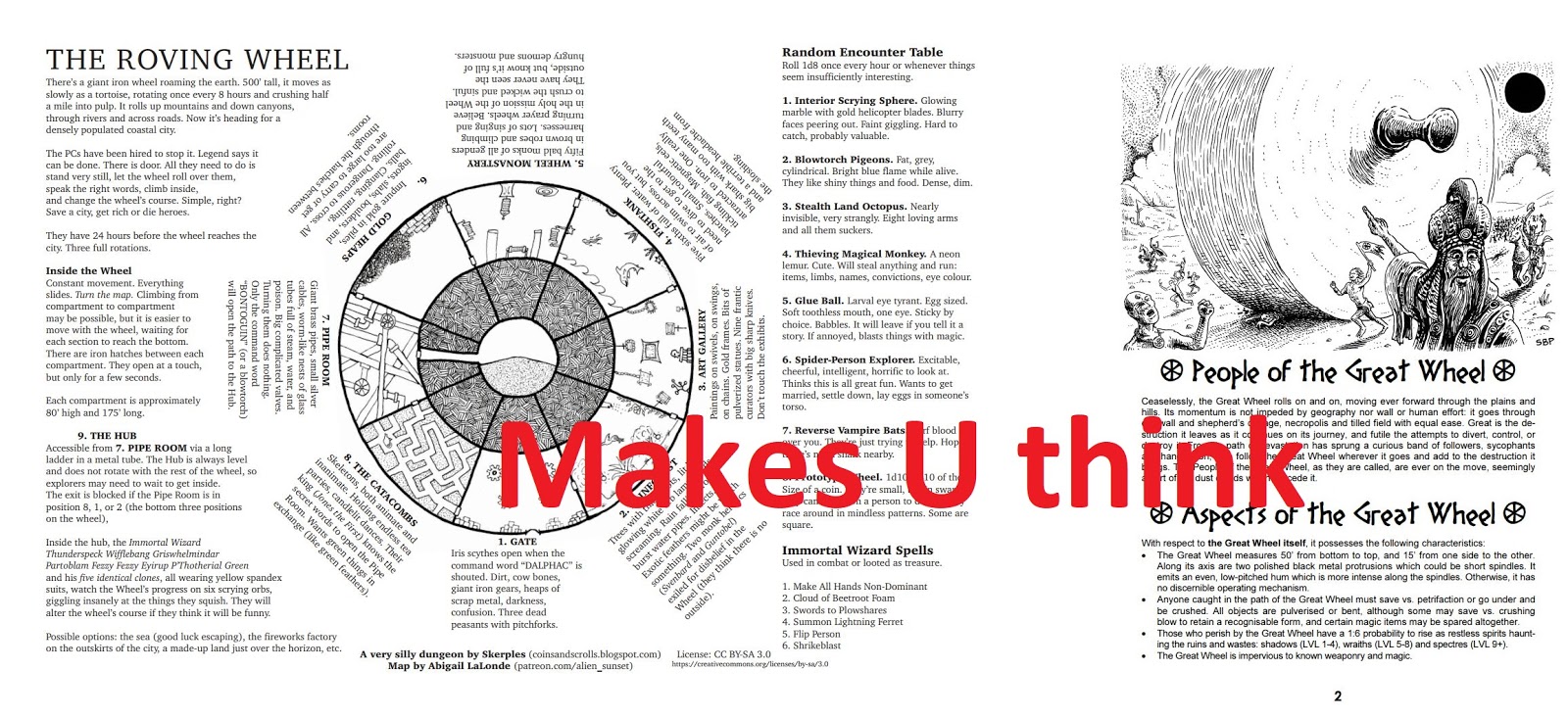
 Exhibit 1: The Great Wheel Gets Even Greater

Make Wheels Great Again
Right: Echoes From Fomalhaut #03, p. 2. (2018)
Left: Winning entry from the 2019 One Page Dungeon Contest (2019)

Well, one wheel is 50' and the other one is 500', so it is clearly different. Moar giant wheels = Moar fun. No harm no foul.

Exhibit 2: Disco Inferno


BURN BABY BURN!

Left: April's Fool post from Beyond Fomalhaut (2018)
Right: New hotness from J. Halk Games (2019).


Stoked!
Actually, this one doesn't stop here, because it turns out Velour Palace of the Disco Emperor has already been the subject of a heated IP battle, with the module's author trashing a larcenous upstart. No kidding.


You tell 'em, Joe!


Now that he is informed, it is no longer a coincidence. Well, well, WELL! 
The things you learn on the Internet.

AWKWARD!
There is also this thing:

UH-OH
Language gap aside, you will note that Velour Palace of the Disco Emperor's first convention appearance was 24 November 2018. Except it was a different convention, a different Disco Emperor module (obviously), and a different designer - my good friend Premier, the only one who had, in fact, asked me if he could run with the idea. (Of course he could.) All testers and con players had agreed it was a great adventure. I have even been reminding Mr. Premier that he might want to publish it, and there might even be an interested publisher (presumably not J. Halk Games).

So here our story ends. 

But wait! This just in! Turns out Luke Gygax himself also wants in on the Disco Emperor dollars!


STOKED

I am honoured to, ah, inspire none else but Melf the Elf. That, Ladies and Gentlemen, is what I call "an OSR Thief class"!

***

So that's how things work in the murkier corners of our cottage industry. What am I going to do about it? Well... Largely nothing. I will surely be flattered a bit. Inspiring people is reassuring you are doing something right.

But I will also sure as hell try to stay two steps ahead.


Friday, 19 July 2019

[MODULE] The Nocturnal Table (NOW AVAILABLE!)

The Nocturnal Table

I am happy to announce the publication of The Nocturnal Table, a 60-page game aid dedicated to city-based adventures, lavishly illustrated by Matthew Ray (cover), Peter Mullen, Stefan Poag and Denis McCarthy. Originally conceived in 2010 as an article for Knockspell Magazine (but only published in the Hungarian), the supplement has since gone through a lot of active play over multiple campaigns, and been expanded with additional material to offer a handy guide to design and run adventure scenarios in a large, sinful city filled with action and intrigue. This is a game aid designed for regular table use, and formatted to be comfortable and accessible. Whether your pick is Lankhmar, the City State, the City of Vultures or Imperial Rome, this supplement will help generate much of the texture of the streets – from illicit warehouses to the monsters and madmen who prowl the night! Citing the back cover…

“The City is a maze. A labyrinth of alleyways, plazas, shortcuts and hidden thoroughfares, it isn’t any less treacherous to navigate than a dungeon. At least during the day, the worst one can expect is a greedy patrol of guards eager for a shakedown, or a thief in the crowd, ready to make a grab and run for it. At night, the sensible and the timid hurry home and bolt their doors. Ecstatic revellers, madmen, assassins, religious fanatics, thrill-seekers, enigmatic apparitions and tiger-headed opium nightmares prowl the streets. And the guards are still not helping. 

The Nocturnal Table is a supplement intended to bring you this city by way of an encounter system, random inspiration tables, NPC and monster statistics, as well as a giant nighttime random encounter table, whose three hundred entries can serve as interludes as well as springboards for complicated investigative scenarios and fantastic conspiracies.”

At the core of The Nocturnal Table is a 300-entry table of random encounters and odd events you can run into at night in a busy fantasy metropolis. From a patrol of guards carrying a slain comrade, to a sinister beggar-catcher soliciting the aid of dishonest adventurers, or a skeleton covered in grey ooze, its eyes glittering gemstones shambling towards the party, all the wonder and menace of a city-crawl are at hand. But that is not all. With The Nocturnal Table, you can…
  • …create general encounters with the aid of a comprehensive encounter system. A caravan in Hightown threatening the party? Six jackalweres offering secret information near the port at night? Or a magic-user accusing a PC in the bazaars? That could be the beginning of a story (or the end of one).
  • …generate merchants selling strange and fantastic goods (as seen in Echoes From Fomalhaut #01 – that table would have been a crime not to reprint here). Is that jovial guard selling weapons as a form of bait? Are that credible horseman’s sugared fruits really from a foreign dimension?
  • …find out what’s in their pockets. The guard came up with a pouch of 12 gold and a folded hood, but that horseman? His 50 silver, 5 electrum and 10 gp was also accompanied by a weird diagram.
  • …generate local colour on the fly. Ominous, gurgling pipes overhead? A drunk who insists he has just seen a party member go the same way “just a while ago”?
  • stock warehouses with exotic goods to plunder! Leave those odd, primitive swords and the rustic carpets collecting dust in the corner, and find out how much those ceremonial globes may be worth.
  • …and set up secret meetings and investigation sites. The meeting will place behind the old, crumbling mosaic – but don’t touch the drink. And the trail leads on, by the sign near the mortuary… just take care: the children are spies!
Guidelines are also offered to re-use the encounters and chart contents for the construction of bizarre plotlines and sinister conspiracies which rule from the shadows… while the City sleeps (these guidelines have been previewed on this blog). All that, and more are at your disposal in… The Nocturnal Table!

The print version of the supplement is available from my Bigcartel store; the PDF edition will be published through DriveThruRPG with a few months’ delay. As always, customers who buy the print edition will receive the PDF version free of charge.

Do note that a flat shipping fee is in effect: you will pay the same whether you order one, two, or more items (larger orders may be split into multiple packages and shipped individually – this does not affect the shipping fee).

Tuesday, 16 July 2019

[BLOG] Noise or Signal? Further Thoughts on Creativity and Randomness

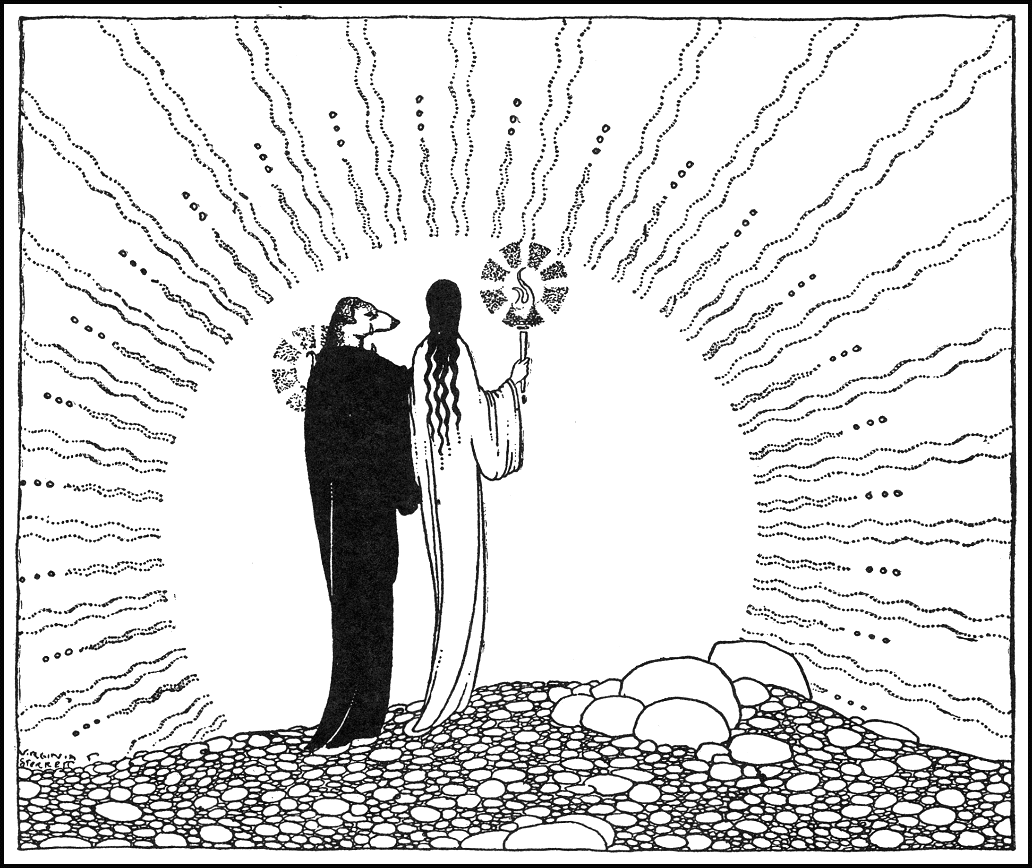
Art by Virginia Frances Sterrett

Creativity aid, not creativity replacement? We have been there before, and it is a slogan uniquely suited to describe a family of products designed to help GMs develop their own adventures. Random generators have been used to jog our imagination and come up with interesting new combinations ever since Ready Ref Sheets and the Dungeon Master’s Guide appendices; while random tables fell out of fashion between the mid-80s and the early 2000s, they have experienced a revival and they are going as strong as ever. Procedural generation is heavily featured outside tabletop RPGs, permeating the worlds of computer games from Elite to Minecraft (not to mention the deep, dark well of roguelikes).

Randomness, of course, produces no innate meaning, and leaves us to project our own onto it. A dungeon room with a “fire throne”, an “ogre taskmaster” and a “magic warhammer” is a hodgepodge of disparate elements; it takes human imagination to connect the dots and turn the random gibberish into something meaningful. (Perhaps the fire throne is a torture implement, the ogre is a jailer, and he has stolen an imprisoned dwarf’s weapon? Or we are in the hall of the fire giant king, the ogre is his underling, and he is guarding the king’s symbol of power?) Just like modules are a framework to run an actual adventure, random tables serve as the framework for the GM’s imagination. And just like modules, the eventual results should bear the personal mark of the GM, and, ultimately, the whole game group. This is how we co-create, and this is how the whole can be more than the sum of disparate parts.

If it is all so subjective and variable, can you actually review a collection of random tables? Can you actually tell a good table from a bad one? I have used a lot of random tables over the years, and have found that some have proven consistently useful, while others are barely ever touched. There are qualities which make certain tables more suitable to provoke the imagination. It has to do with the entries’ imaginative power – their capability to evoke images which can be spun into fantasy adventures.

To work their magic, we have to trust the tables enough to follow them somewhere. But they must take us someplace special – imaginary places of wonder and menace. A table that does not push us out of our current frame of mind is not a good creativity aid, because we are already there. D&D has a common language – of oak doors, dark corridors, pit traps, wizards and goblins and maybe beholders – which is intimately familiar even to people who do not play D&D. They are “tropes” (a horrid word embodied in that most horrid product of internerd autism, TVTropes). Good tables take us beyond the basics – it is still the same language, but a richer, deeper, more varied layer of it.

Art by Edward Coley Burne-Jones
Some of the imaginative power of random tables lies in the strength of individual idea kernels, but just as much hinges on the combination and juxtaposition of elements which fit together in ways which are not altogether comfortable. Creative tension – the shock of unexpected combinations and the images they create – is what takes the mind beyond the limits of routine thought patterns. Yet there is a limit to oddity, where it ceases to be meaningful. Square birds in purple sauce? These elements don’t fit into a coherent hole. There has to be a “bridging” moment where the pieces shift together, and create something new. “Serpents” and “gates” are both powerful images in their own right, laden with symbolic significance – but a serpent-gate? That is surely something more. A “serpent gate mirror”? Now we are getting there. However, we are also getting more specific, which may limit our options, and reduce us to obvious paths where potent images are diluted back to cliché.
  
Results open to interpretation are better than static and immutable ones. This lies at the heart of the “oracular” power of tables – they tell the truth, but the truth they tell is different from perspective to perspective. This is a tricky balance to achieve – specific enough to be powerful, general enough to fit many different situations – and just vague enough. Dreams are the classic go-to example (and indeed, the Surrealists had already discovered this, including the use of random generation to combine dream-images). The best tables can be reused again and again, because their results have a universal character. This does not mean generic. The “Ruins & Relics” table from Ready Ref Sheets, the random wilderness encounter charts in the Dungeon Masters Guide, or the very first “Locations (Overview)” table in the Tome of Adventure Design all have a strong personality them that influences their results. Indeed, “Ruins & Relics” is as core to the identity of the Wilderlands as the DMG charts to “the AD&D campaign”, and the ToAD table to Mythmere’s vision of “weird fantasy” as the key to the rediscovery of old-school gaming. These tables are foundational.

And finally, there is randomness. A totally random generator is just the noise of a thousand monkeys at a thousand typewriters. It may produce something good – but it won’t. A random generator whose results can be predicted, or which does not produce novelty, is superfluous: everyone possesses the ideas it produces by default. And there is a third, subtle distinction: while a kaleidoscope always produces something different, it always produces the same thing – a kaleidoscopic image. It is a powerful tool, but limited.

Saturday, 13 July 2019

[NEWS] The Lost Valley of Kishar and Echoes From Fomalhaut #05 released in PDF

New PDF releases

I am happy to announce the publication of the PDF versions of The Lost Valley of Kishar and Echoes From Fomalhaut #05, now available from DriveThruRPG. The Lost Valley offers a 6th to 8th level wilderness adventure, a journey to a lost world inhabited by prehistoric beasts and other, even stranger beings. This module was written by Gabor Csomos, and won first place at a 2018 adventure design contest. Second place went to The Enchantment of Vashundara, an excellent adventure in its own right. This module, written by Zsolt Varga, is featured in Echoes #05. The zine also introduces two towns: Tirwas is a community once governed by egalitarian customs, and now divided between a group of powerful Landlords, while Sleepy Haven is a seemingly idyllic coastal settlement… or is it? A second adventure, set in a network of abandoned storehouses and caverns beneath Tirwas, is also featured.

Both PDF publications are provided free to those who have ordered them in print – and print copies are still available at emdt.bigcartel.com. However, if you wish to place a print order, it may be a good idea to wait a week for the next EMDT release, which is…

***

Lurking
The Nocturnal Table! (And no, that will not be the final cover on the left – it is being finalised by Matthew Ray.) This supplement is a “city adventure game aid”, originally written in 2010 as an article for Knockspell magazine, and later expanded for standalone publication (which did not happen at that time). A Hungarian edition was released somewhat later, and was used extensively in our city adventures and campaigns. The present English edition, a hefty 60 pages with lavish illustrations by Peter Mullen, Stefan Poag and Denis McCarthy, features further expansions and additions based on those adventures.

At the core of The Nocturnal Table is a 300-entry table of random encounters and odd events you can run into at night in a busy fantasy metropolis. However, this is just one part of the deal – further random charts and guidelines are provided for running city scenarios featuring thievery, fantastic conspiracies, and weird locations. Want to generate a random warehouse’s worth of valuables to plunder? Create a shady locale to meet with a contact? See what was being carried by that patrician you have just pickpocketed? All that, and more are at your disposal in the supplement. This is a supplement designed for regular table use, and formatted to be comfortable and accessible.

Hopefully going on sale next weekend!

***


In other news, what am I working on? My focus as of late has been mainly on Castle Xyntillan, a large funhouse megadungeon for Swords&Wizardry. This work is in the first proofreading stage (and a short appendix or two are still to be finalised), and the first art orders are starting to roll in. I have also received the first versions of the poster maps (note plural) by Rob Conley, and I must say they are beautiful examples of gaming cartography. These will be maps to both use at the table and marvel at! (And I hope you will agree on this point when you see them.) The current plan for Xyntillan is a 112-page full-sized hardcover, roughly the size of the 1st edition Monster Manual, with four separate map sheets on durable paper. I am shooting for Christmas, and we will see if we get there on time. With a project that has been in progress in one form or another since 2006, you start to accept small delays in the hope the end result will make up for it.

And speaking of delays, Echoes #06 is obviously going to be late. It looks like a mid-September release (which is still fairly realistic), and I hope it will be worth the wait, too. Issue #06 will feature some of the materials which have provided the zine’s raison d'être, the stuff I really wanted to see in print. We will be visiting the City of Vultures!


Wednesday, 10 July 2019

[STUFF] Further Adventures in Morthimion – LEVEL 2

Around the corner, you see...

[Players wishing to adventure in Castle Morthimion: STAY AWAY!]

From the beginning, Castle Morthimion has been intended as a “filler” dungeon we could turn to when I was too busy to prepare for our regular games, or when we didn’t have a sufficient player turnout for campaign play. The great thing about OD&D is that you can play it on and off in gaps of time – for example, on a train.

Which reminds me, last weekend I was happy to welcome Santiago Oría (known on various forums as Zulgyan) in Hungary, and in between showing him the sights, and arranging a larger game in the City of Vulture with the gang, we had a three-hour train ride which we spent playing OD&D. You can play a pretty functional pickup game of OD&D in that fixed time period, and there was even time for a second expedition.

Monday, 8 July 2019

[BLOG] The Sinister Secret of THAC0


It is called ADVANCED Dungeons & Dragons, meme lady!
Of all things AD&D, THAC0 may have the most undeserved bad reputation. You will find people going to war for the honour of the weapon vs. AC table, weapon speed factors (I personally like them), level limits (damn right!) and grappling, but THAC0’s treatment is at best apologetic. Neither the TRV old-schoolers nor the new kids like it much, while both sides find it a convenient target to point and laugh at. Convoluted, counter-intuitive, a chore, “high math” – it has all been said before. 

In fact, THAC0 is significantly easier and more elegant than it looks. This post, then, is written in the interest of public information – clearing the record and venturing a guess why THAC0’s status has suffered undeservedly. (Similar points have been made in the past, but sometimes, repeating something can be useful. Surely, people are still stubbornly wrong about THAC0’s merits!)

The simple elegance of the THAC0 mechanic is easy to grasp. Here is how THAC0-based combat works:
  1. Take your THAC0 value.
  2. Roll 1d20 for your attack and subtract it from your THAC0.
  3. The resulting value is the AC you hit.

That’s it. Now you can do THAC0!

For example, your THAC0 is 20. You roll 10. 20-10=10. You hit AC 10.
Or your THAC0 is 14. You roll 17. 14-17=-3. You hit AC -3.
In the most complicated case you may face, your THAC0 is 14 but the GM grants you a 2 to hit bonus for attacking from higher ground. You roll 12 and apply the modifier, making 14. 14-14=0. You hit AC 0.

THAC0 in the Nobody Cares
About Rath Edition
Hardly rocket science. But if it is so simple, what has made THAC0 the red-headed stepchild of Advanced Dungeons & Dragons® mechanics? The answer is depressingly simple: the THAC0 I described is not the THAC0 AD&D has actually tried to sell us. Here is the rule from the 2e Player’s Handbook (full text in image to the right):
  1. Take your THAC0 value.
  2. Subtract the target’s AC value.
  3. Roll 1d20 and beat the resulting value.

To make THAC0 work with this method, you need to know your opponent’s AC – an information which is kept by the GM, and (often rightfully) hidden from the players until combat develops. In comparison, the first method keeps GM information in the GM’s hands, and preserves some of the “fog of war” of the game (of course, the players will eventually figure out how well their opponents are fighting, which is a fine learning process).

The second approach, while it uses the same number, removes both some of the speed and some of the convenience of the mechanic. It does not grant a clear benefit over combat matrices (we will not go into esoterica like “repeating 20s” this time). However, it is clearly inferior to the first take, which is a smooth subtraction-based mechanic, and it is easy to cite 3rd edition’s Base Attack Bonus + 1d20 vs. AC method as an improvement. What makes the case of THAC0 more curious is how many of the explanations start from the second variety, and how few people seem to even know of the first. It is not entirely obscure – you can find it in these posts Mixed Signals and THAC0 Dragon (but then someone with that handle would probably know his THAC0) – but it is not the common knowledge it should be.

Patient Zero
The ultimate reason may be simple inertia. You can learn about THAC0’s history from this post by Jon Peterson (including valuable comments by Lawrence Schick, who had proposed, but failed to get an ascending AC system implemented), and he posts the rule as it had first appeared in a 1978 copy of Alarums & Excursions. The implementation is clearly the same as the 2e version; however, here the GM is supposed to calculate and keep a record of character THAC0s. This makes much more sense by separating player and GM knowledge, but it does offload extra work on the GM. Interestingly, a 2017 post on Hexcellency outlines a card-based method that seems to reinvent this practice! In any case, you can draw a straight line right from the A&E piece to the 2e rulebooks – THAC0 had remained remarkably stable despite the (theoretical) existence of a more efficient algorithm for its use.

Monster cards

So that is the sad tale of THAC0, which had never lived up to its real potential, and has mostly been replaced either by ascending AC systems or a return to combat tables. It is one method of combat among many – just make sure to stick with the first version if you are actually using it.

Now it makes complete sense