Showing posts with label beyonde. Show all posts

Thursday, 31 July 2025

[BEYONDE] The Domes of Calrathia

The Domes of Calrathia
The word “stagnation” describes much of fantastic fiction today, stemming from a larger cultural exhaustion in modern society. Sturgeon’s law has always held true, but at least the bad stuff was often colourful, lovable junk; something that could be bad in interesting ways. Today’s junk is a different kind. The institutions of genre publishing have turned their output into a morass of safe mediocrity. Critics highlight the role of the theatre kid invasion and their political manias, but that is only a part of it: it is more that the final result is an extreme case of design-by-committee through social pressures and institutional takeover. Nothing of interest comes out of those cursed ruins anymore, and it can be safely abandoned to the wild beasts and mutants which populate it. If something interesting is happening at all, it takes place in the wilderness far from these structures, where the huddled survivors gather to build their new thing. Outfits like DMR Books, Cirsova Magazine, and a few similar venues is where you can go to for strong heroic fantasy. The results are still mixed, but again, colourful, lovable junk beats dull pap, and sometimes you catch something genuinely great – two or three stories in your average DMR collection, or Mark Mellon’s outstanding Melkart Unchained in an otherwise fairly ho-hum volume of peplum stories. Most of these stories work inside older genres, mainly mid-century pulp, but something puzzling and new is still rarely seen. The following book is something puzzling and new.

The Domes of Calrathia by Isaac Young is a self-published fantasy novel (the first of a two-part story) which comes even from outside these outposts, straight out of the wilderness. I came across it pretty much at random on a political interview podcast. The author had interesting things to say about the state of fantasy, and the kind of fiction he liked. I found my interest piqued. He had an Indiegogo for his first print book, and based on the excerpts, it seemed like a bet worth taking. It turns out the bet was a good one, and the 106 backers (of whom 72 went for the physical book) got something well worth their money.

"Of the men who inhabit the strange lands south of the Great Ice Plain, I was told there are three varieties: the maddened cannibals whose heads are cut in the shape of their hallowed obelisk, the wandering ghost men who eat nothing and yet still live, and the men of Calrathia, sat huddled in their great domes which are vast enough to encompass cities.

I, the Astronomer Sirius, had only heard tall-tales and faded stories of such things. And not long into my journey, it seemed I would die before encountering any of them."

This is a book set at the world’s end, both in the physical and spiritual sense. We are at the end of the great ages, in the winter of civilisation. Mankind, which had once reached across the stars, has become exhausted, living among the ruins of inconceivably grand megastructures it possesses no means or will to replicate, or even maintain. Long-operating infrastructures built aeons ago are starting to fail, and are replaced with stop-gap solutions on a much more minor scale, accompanied by growing dysfunction. This was not by means of war or disaster, just mankind’s slow, long retreat from the heights of its greatness. As things are grinding to a halt, the fringes of the world are claimed by the creeping cold; oceans frozen into the endless Great Ice Plain, and the most distant outpost of civilisation, Terminus, gradually being abandoned as the machines that provide its heat giving out. Strange tribes and mythical beasts reclaim what has been left behind, and things that have been taken for granted – long-distance travel, security, serving automatons, or an ordered civilisation – fade away:

“Up ahead, I saw the walls of Terminus. And until then, I did not realise there were, in fact, two sets of walls. The first was made of wood and stone and seemingly whatever the denizens of Terminus found as construction material from the ruins. It was jagged and piled up in an ill manner. The only part of this wall that seemed to be tended was the gate, which sat squarely in the distance. The divide appeared to serve one purpose, to keep the unwanted firmly outside the boundaries of Terminus proper.

The second wall was on the other side of the city, and it was the one I had spotted from far off. It ran from east to west, disappearing in the long distance. This wall was ancient, and it was so large that it devoured much of the sky, a steel horizon of rust and faded metal. But even more impressively, shooting up from the wall was a spire that towered firmly into the Firmament. Though having seen it from a distance, I never had a vantage point to properly appreciate its immense size. It hung over the city like the fin of a giant fish.

‘I’ve never seen such a structure,’ I spoke to Gereon.

‘That is the Border Wall and Castle Padua. They were built when the Great Ice Plain was an open sea.’

‘But why were they built? I recall no histories of war here, and this must’ve been long before the cannibals took root.’

‘It was against the winter,’ Gereon said. ‘When men realized this land was growing colder, they built the Border Wall to keep the cold at bay. And it did, for a thousand generations, but that was an age ago. Now, the ashen furnaces can barely heat the city.’”

The book’s narrator-protagonist, Sirius, is an Astronomer, the trainee of what might be described an order of scholarly paladins, as versed in the knowledge of the heavenly bodies as hand-to-hand combat and religious philosophy. His voyage across the frozen lands is part pilgrimage and part exile: he has been entrusted with delivering a priceless illuminated manuscript containing his order’s history to Calrathia, the city of all knowledge far beyond the last outposts of men. No attempt has been made to undertake the journey in over 300 years, and it is understood that it is bound to be a death sentence for a murder that would otherwise call for his expulsion and execution. This is also the last such journey that will ever take place before things fall apart for good, and the Astronomers’ knowledge also becomes lost.

Calrathia’s inspirations are plain to see. This is a “dying Earth” book inspired by Gene Wolfe (mainly), Jack Vance, Lovecraft’s Dreamlands, and Edgar Rice Burroughs. It bears similarities to Leigh Brackett’s Book of Skaith in some of its themes (a frozen, dying world; corrupted and failing civilisation; pockets of strange survivors who have adapted to the spreading cold), although it seems the author was unfamiliar with this book. As an example of the subgenre, it succeeds admirably: it creates a compelling setting filled with strangeness and fine detail without being pedantic about it. Mid-range fantasy explains everything; great fantasy leaves room for interpretation and preserves an air of distance and mystery. The Domes of Calrathia is first and foremost mysterious – we gain glimpses into the world’s workings from the narrator’s point of view, but we do not get a precise picture, and a lot of the context is gained through the resonance of association and careful word choice (these are also devices Wolfe and Vance use in their work). For example, the Astronomers can command anemoi, winged beings who might be angels, elementals, or something in between – but they are not described in detail. Neither are the precise technologies and grand projects alluded to in the book explained. It is fairly clear that humanity was (and might still be) capable of interstellar travel, or that Terminus had a massive port. In the book, these are described from the narrator’s viewpoint, such as:

“It was on the fourth morning that I thought I had spotted the tips of the mountains in the distance, but Odoacer informed me that they were merely the cairns that marked the last leg of our journey. I was confused, but as I saw, these shapes resolved into spires far too thin to be called mountains, though still indisputably large. The tribesmen knew them as markers of a sort, but I immediately recognised them for what they were. Great ancient ships sat in their berths; their bows pointed aimlessly at the sky. They were older than the ones at Terminus, and their hermetically sealed hulls were clearly meant for the empty sea. The vessels were all held in place by titanic scaffolds long rusted over. (…) There have been few times in my life when silence was painful on my ears, and it was not the first instance I had encountered such graveyards. And yet, this place opened a hole in my heart, much more so than the ones at the Border Wall. These ships belonged to my vocation, to men not much different than I.”

There is great wonder and fascination in ruins, and the book is written from the perspective of a scholar standing in the shadow of his forebearers, looking up on works he partially understands, but cannot fully fathom. It is this combination of grief, faith and wonder which gives the novel its own tone. The novel has a distinct late Roman, maybe even early Byzantine vibe in its mythological and spiritual references, along with strong Biblical parallels (sometimes vague, sometimes quite literal). This is also an era where much of the earlier world-spanning civilisation is already lost, or falling into disrepair and ruin in a much smaller age. It is a fascinating setting for adventure, and the book explores its physical and spiritual landscapes in full.

Sirius himself is a compelling character. He is competent in scholarship and swordplay, but naïve in the ways of the world, which gets him in deep trouble more so than other miscalculations. He is also an example of someone laden with grave doubts, and preoccupied with deep moral concerns. The crucial conflict of the book is how to act as a righteous man in this degraded and cold world, balancing the needs of survival with one’s moral principles, and avoiding missteps which would invite spiritual ruin. Epic fantasy often ends up heralding a sort of milquetoast morality that feels easy and tawdry (and its deconstruction simply revels in cynicism and misanthropy), but The Domes of Calrathia treats the subject with a good deal of serious thought. Sirius can see nobility in the conduct of an old guard dog, a dutiful automation serving a patrician family, or the birds he encounters across the vastness of the Great Ice Plain, and he struggles to make the right decisions under the pressures of his quest.

“The dog whimpered and licked her fingers weakly.

‘You do this beast dishonour.’ Gereon kept his gaze away from the animal. ‘If you do not have the heart to kill it, at least remove this creature from the sight of others. It is a foul thing to be decrepit in the full light of day. Cover its shame.

‘Is it so much better to die in a sequestered corner than at your post’ I asked, coming to the aid of Berenice. ‘There is no shame in a well-spent life, and this dog is wise for remaining here. For he knows the day is coming when he shall rejoin his master, and he shall receive his just reward for remaining faithful unto death.’”

The world of Sirius is one ordered by moral principles, and the cosmic plan of the Potentate who had created it, but also contradictions and self-doubt concerning his deeds and mission (a de facto death sentence for a crime he either did not commit, or committed for a very good reason – this is not clarified in the text). Some of the book’s voice recalls St. Augustine more than anything, and some of its plot hints at the deeper spiritual struggle behind the sojourn to Calrathia, whose significance Sirius only begins to realise in the later segments of the book. Again, it is as much pilgrimage as adventure, and this is a novel written from a deeply held Catholic faith.

As this is a first novel (at least as a printed work), it is not without flaws. About two thirds of the novel deals with intrigue in the city of Terminus, while the trek across the Great Ice Plain, which leans more strongly into the setting’s mythic dimensions, is comparatively shorter. The second volume, which promises to complete the story, may correct this imbalance, but presently, this arc feels underdeveloped. Thus, the pacing feels off sometimes, while some of the middle portion lags a little. But these are minor criticisms. The Domes of Calrathia stands up to scrutiny, and as a first, it is a very strong entry. It is also something that feels new in today’s heroic fantasy – it owes a debt to the works it is inspired by, but it continues the tradition in a new and interesting direction.

The Domes of Calrathia is currently available on Amazon as a paperback, a free version is available in full on Royal Road, and an audiobook is available in full on Youtube. There is even a trailer.

Across the Icy Wastes


Thursday, 30 November 2023

[BEYONDE] Thief: The Black Parade [NOW AVAILABLE]


The Black Parade

“In THE BLACK PARADE you play the character of Hume, a hardened

criminal who was sent into exile as a punishment for his crimes.

The year is 833. You are now back in The City, a sprawling metro-

polis of soot-caked brick, greasy fumes and noisy machinery, with

many a sinister conspiracy whispered behind closed doors. Lost and

without a penny to your name, you are back to your life of thievery

and must find your old associate Dahlquist. Shadows and silence are

your allies. Light is your enemy. Stealth and cunning are your tools.

... And the riches of others are yours for the taking.”

 Regular readers of the blog may know I am a Thief: The Dark Project fan – indeed, it is my favourite computer game of all time, and one I have made a handful of fan missions for. Thief, today 25 years old, is a rich, complex and challenging stealth game that combines tight gameplay with excellent level design and top-notch mood. It is also a game which holds a lot of interest for old-school gaming: its roots lie in trying to simulate an AD&D-style thief on the computer, and there is much you can learn about dungeon design, open-ended scenarios, and even city adventures by playing it. A small but active level design community exists around the game (AD&D adventure designer Anthony Huso was one of the early greats in the scene), and there has been a steady flow of user-made fan missions over the years, from very simple thieving scenarios to full mission packs. However, not since T2X: Shadows of the Metal Age (2005) has a campaign approaching the scope and quality of the original Dark Project been attempted, let alone completed. (Your truly had tried and failed with The Crucible of Omens, a never-ever for The Dark Mod, a Doom3-based Thief spinoff.)

Until now.

Dark Mysteries

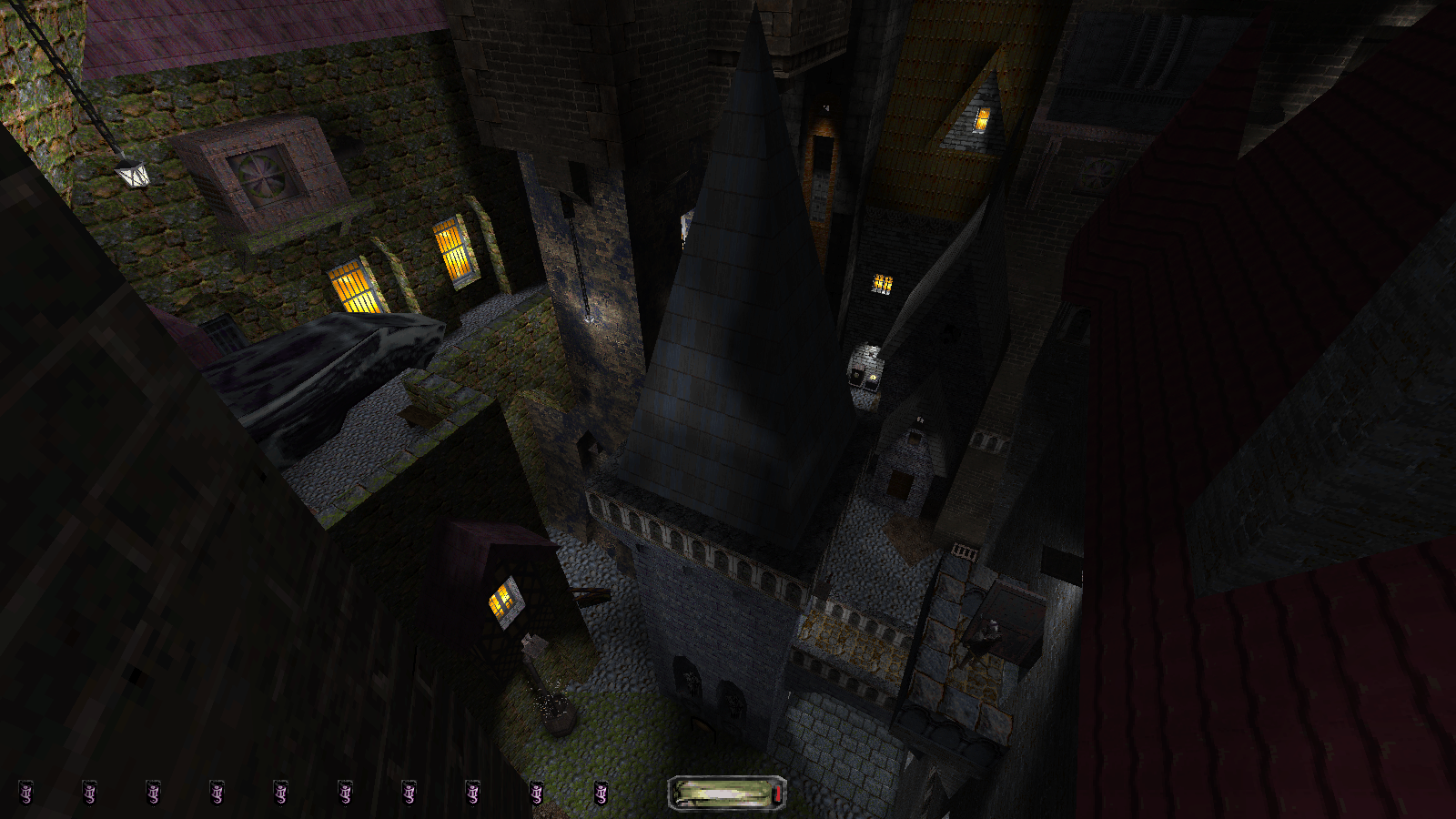
The Black Parade is a new, full, ten-mission campaign that has been released for the game’s 25th anniversary, built over seven years by some of the best level designers in the scene, and made freely available for download. Set slightly before the events of The Dark Project, TBP focuses on the adventures of Hume, a former convict, as he becomes entangled in a dark plot concocted by forces beyond his control, and must use stealth and guile to survive and come out alive from the ordeal. The dark depths of Thief’s nameless City, a corrupt industrial metropolis, serve as the story’s locations: dimly lit streets, crumbling mansions inhabited by the idle rich, haunted crypts and thieves’ dens populated by the dregs of society. I had the privilege of beta-testing the pack (there were several rounds of testing by both old hands and new players), and I can report it is very much worth the trip.

Skullduggery and Deceit
The Black Parade spares no expense in constructing this world: the ten missions you will play through are sprawling, complex, and rich with detail. These are all open-ended, exploration-heavy missions offering multiple ways of achieving your objectives, built by a team who get Thief’s gameplay loop, but also know how to make missions that, while difficult, are never unfair or needlessly obscure. (They are a step up from TDP, but that is to be expected.) They are rich in navigation-oriented challenges (verticality, waterways, obscure entrances and hidden byways), tense stealth situations (from dodging patrols and sometimes security systems to shadowing a lone figure through the City’s streets), and careful decision-making between stealth and exposure. The missions, although connected by a joint plot and a dedication to superb quality, are very varied in theme and approach: the hands of multiple authors with different design styles are visible, but so is the refinement that comes from teamwork. These are all interesting, high-quality missions, and there are two in the lineup I rank among the very best ever made.

Corrupted Splendour

But the excellence of The Black Parade goes beyond level design (although that is the most important element). The campaign comes with well-animated cutscenes between missions; numerous new voice lines, textures and objects; new AI types (including some once considered impossible) and game mechanics. Many previous fan missions have done one or a few of these; but very rarely all, and never at this level of quality. In all cases, the updates to The Dark Project extend the original game while remaining entirely faithful to its mood and style: at no point does something stick out like a sore thumb. Thief has always been heavy on the mood, and this campaign pack returns to that level of quality, while taking advantage of the technical advances which allow a 1999 game to transcend the limits of its antediluvian engine and quirky level editor (as the quote from one of the original devs, goes, “Once upon a time, not only would DromEd crash, but it would go out and kill your family afterwards”). In its consciously low-poly architecture and grainy textures – no ill-advised attempt has been to make this look like a mid-2000s experience – The Black Parade builds scenes of labyrinthine complexity and deep SOVL.

A Labyrinthine Plot

This is also one of those rare mods that takes writing seriously: the main story was meticulously plotted before the levels entered the building phase, and the levels were then filled with fragments of readable texts, environmental storytelling, AI conversations and the evolving objectives Hume will face during the course of the missions. Although the writing quality tends to be high in the Thief level design community, this is a standout even by those standards. While the cutscenes convey the main plot, much in gameplay is information you need to piece together on your own – from clues that will help you reach your objectives, avoid deadly hazards or find carefully hidden loot; to pieces which reveal more about the surrounding world in an unobtrusive way.

Strange Perspectives

There is much more that could be written about The Black Parade, and I suspect it will be widely discussed in the following weeks and months. For now, though, this introduction should suffice. You can download the campaign here. A trailer, and a handful of screenshots by yours truly, follow.


Lost in the Catacombs

Back in a Smoke-Shrouded City

Venturing to Locales Long Forgotten

Pursued by Merciless Enemies

Wednesday, 4 January 2023

[BEYONDE] Arthurian Legends

Art thou a loser? Do you rob the poor and feed the rich? Kill baby once and future King Arthur? Let Evil triumph? Surely not! It is time to show those Saxon bastards who is the best fighting-man in the land.

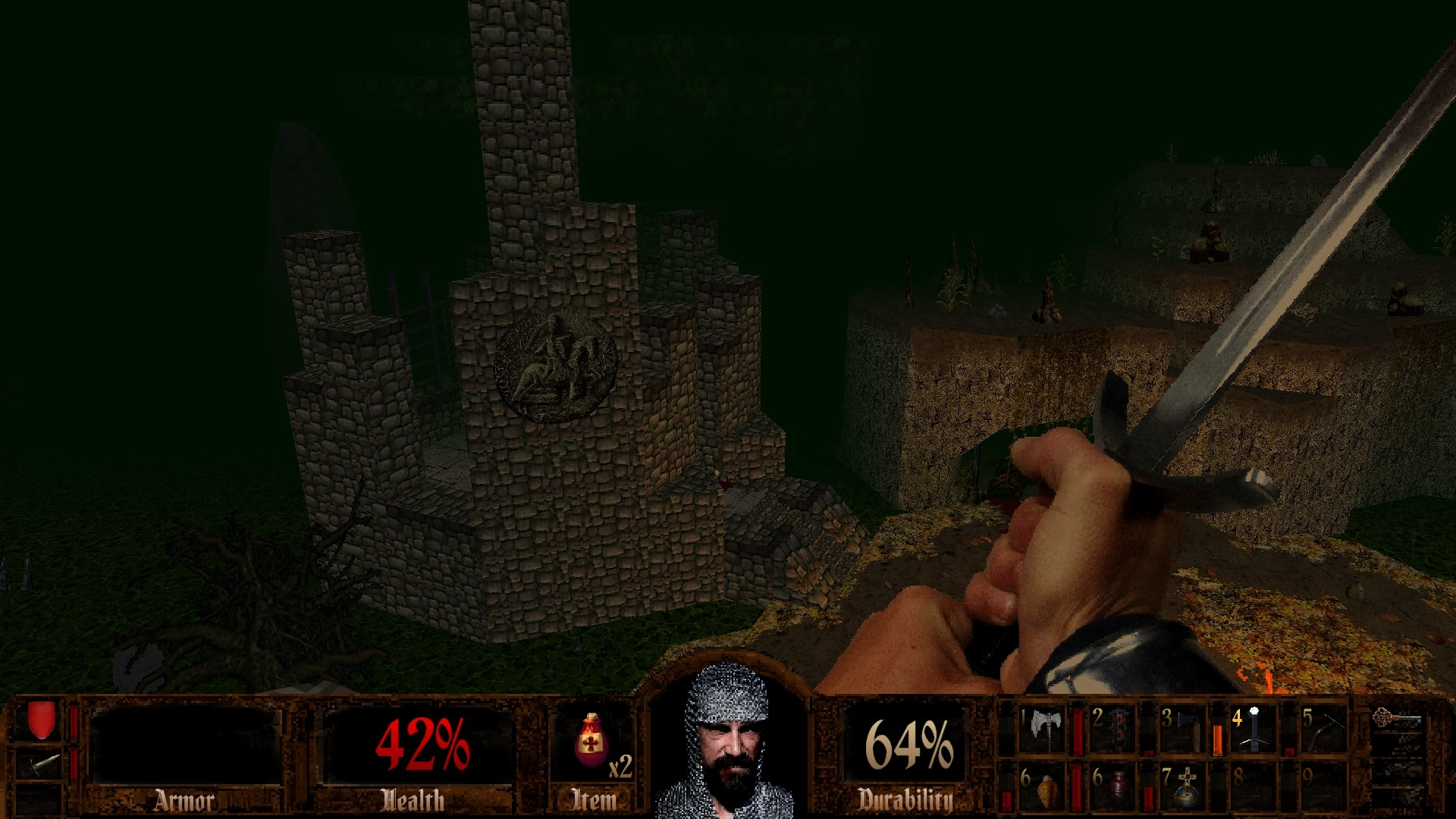
Arthurian Legends is a first-person retro-pixel hack and slash game set in a pre-Arthurian England beset by Saxon hordes, fell beasts, and dark forces which have set their sights on the fair island. Dense, enchanted forests, miasmatic swamps, icy wastes, and the ruins of older ages await, along with a plethora of monsters, weapons, magical spells, and carefully hidden secrets. It is neither a historical game nor high fantasy, but a sort of mishmash of Arthuriana from post-Roman stuff to mediaeval romances and a bit of Army of Darkness and boomer shooters (more in the attitude than the weaponry). It is a whole lot of fun.

Have at thee!

Few computer games capture the spirit of playing a no-nonsense fighting man. They always add backstory or complications which end up diluting the idea. However, less is more. Die by the Sword, now as ancient as Arthurian Legends tries to appear with its pixelated look, is one of the few which compare. These games get it right by talking less, keeping it simple, and focusing on attitude and action. The FPS genre doesn’t usually go well with melee combat due to the lack of body awareness, but Arthurian Games pulls it off. It is viscerally fun to go into battle. Mobility is important and you have to exploit both terrain and movement skills to survive. Blocking with shields is an important element, and these shields get cracked and worn down as they sustain repeated attacks – as do most weapons. The feedback is great. There is a satifying “crunch” to the hack-and-slash, helped by the graphics and sound effects. Turns out decapitating Saxons with throwing axes is one of the most fun thing you can do on the PC (as a Saxon, I make this confession slightly grudgingly, but give credit where credit’s due).

Toil and Trouble
The arsenal provides a variety of well-balanced weapons. Your basic melee weapon, a trusty axe, is your primary tool for slaying enemies, and never breaks. Unlike a lot of default melee weapons in shooters, it never becomes useless, especially in axe-and-board action. This is not Quake’s piddly axe, but a serious weapon for a serious man. A much quicker, but less durable gladius can be found in secret locations, and in place of the shield, a parrying dagger or (later) a mini-crossbow may be substituted. The spiked cudgel is more powerful than the axe, and drives back enemies before they can hit you, but breaks quickly. Throwing axes are the best close-range ranged weapons in gaming, bar none, and go well with the shield. Why nobody has done it properly before is a mystery, but Arthurian Legends just aces it on the first try. The heavy hitter in melee is the two-handed sword, which limits blocking ability, but has the reach and power to slice up knights and serious beasts. The bow is comparatively weak, with low damage and a slow rate of fire – this is not primarily a game about shooting, but getting up close and personal – but it does its job where you can’t do that easily. An explosive and incendiary grenade, more Army of Darkness here than Le Morte d’Arthur, are both useful against incoming enemy groups, particularly spider nests. The prestigious holy hand grenade makes a much welcome appearance. Poison daggers which continue slowly damaging enemies are included, along with powerful wands which I have only used against the mightiest of monsters. Appropriately, most healing is done by quaffing down mead and gorging yourself on food from your enemies’ campfires and tables. You will also find equipment ranging from wolf traps, caltrops and healing potions to spell runes, which are very useful but come in limited quantities.

Ancient Celtic Secret
The weapons combine well with the opponents, which range from aggressive melee combatants to skirmisher type enemies who hurl axes, spit poison, or otherwise inconvenience you. From Saxon raiders and wolves, you start to meet knights, archers, and various fantastic beasts from two-headed wolves to giant spiders and flying imps. Eventually, dark wizards start to make an appearance. All these types require different responses and approaches, and often require using terrain to your advantage to best them. The AI is not really sophisticated (it is not aggressive in seeking you out around obstacles), but opponents can scale terrain well, and positioning is done skilfully. Most of the encounter design is top notch. This is a challenging game on higher difficulties, pushing you to git gud and use your weapons and items to their fullest potential. While Arthurian Legends is demanding, it is also rewarding: by being pushed, you will improve, and become a skilled warrior who can laugh in the face of enemies who had been a serious problem early on.

However, it is the level design which deserves the highest praise. A lot of work has obviously gone into this element; while things can be hard, they are never unfair – success is based on confident skill and practice, not dumb luck or pixel-perfect jumps. It is never a pushover either. It is all carefully balanced. The levels are varied, large, and there are lots of them over three full episodes. A lot of modern level design is flat, dumb, and completely railroaded, and while Arthurian Legends has a general gated/keycard-based design, the individual map sections present reasonably open-ended challenges. There is a lot of uneven terrain, height differences, choke points, vantage points for bowmen, cover to take shelter behind, and often alternate routes to get the drop on the Saxon foe.

Icy

Not only do the levels offer a series of excellent combat scenarios to get through, they also have a strong element of exploration. While route-finding is never an issue, good observation is rewarded. Several secrets, including secret armouries, hidden equipment, magic items, and proper secret levels are found through the missions. These are good secrets, rewarding not pixel-bitching or wall-hugging, but noticing a hidden crevice, a weakened part of wall, or a ledge you can climb down to with a series of careful jumps. The levels also look good in their chunky, pixelated way. There are sunken swamp ruins, dark ice caves, the remains of massive Roman walls blasted by magical snowstorms, crude villages and castles occupied by the invaders or their dark masters. It has visual imagination and, despite the haphazard sources of inspiration, a cohesive feel that’s all fighting-man, not poncy bard.

There are a few flaws in the game, too. The last episode, set in a realm of tombs, dungeons and the undead, is still good but less captivating. Two bugs are also worth noting. The game runs badly on a specific sort of hardware due to engine-related issues that cannot be fixed – so try the demo before buying to see if you are affected. My playthrough was also cut short right at the penultimate level by a nasty bug, which is a bummer, but something I can live with. The rest is all quite good.

Arthurian Legends is the best “guy in a chainmail” game in a long while, and well worth the money and time investment.

S L A I N


Sunday, 6 November 2022

[BEYONDE] A Few Thoughts on Why the Twitter Deal is Significant

That's terror.
[This is obviously not gaming related.]

With one of the larger swamps drained and the political commissars dismissed, the grift ecosystem will become more competitive and overcrowded, while gaps in the enforcement system emerge. If more companies and institutions did something similar, it would overwhelm and implode the control system. Since it could not feed its army of woke enforcers, it would not not be able to successfully harness its own distributed network as an effective weapon against single, isolated targets. In the last decade, the managerial elites have, in effect, successfully centralised the distributed systems of the Internet, and gained dictatorial power over the individual, and even the individual organisation. Whether this is a coordinated effort by the managerial elites or an end result of impersonal social forces (or more likely, the former exploiting and leveraging the latter – large-scale social "hacking"), this is where we have been heading.

An uncontrolled Twitter alone does not win the war for a free Internet, but it allows people to actually fight battles, which they currently can't without swift and brutal counter-action. There is a good reason platform ownership is so important to the managerial class. A reformed, reasonably open Twitter would be a constant hole in their control scheme, from which further cracks could spread outwards, and which would allow their opponents to speak up and organise.

The totalitarian Chinese-style information management model they desire cannot exist in a free society, because then their leverage, the ability to snuff you out for non-compliance is gone. Individuals could just walk away from them or say "nah" to their unhinged demands. Imagine campus radicals in an environment that is even halfway like the 1990s. It just would not work, because their views are weird and repugnant to normie. It would be hilarious if they couldn’t just terminate you for even laughing at them. If Twitter is indeed opened up, other companies may also get the idea that the whole ESG/Blackrock/woke control model is harmful to their interests (a lot of them obviously think so privately, if only because it restricts their own power). It is not the beginning of the end, but at least it is in the end of the beginning.

Yes, JC. In fact, I do.
This is why the Twitter deal is so significant, and why it will be good even if Based Freeze Peach Man is not going to deliver on every hope people have pinned on him. (It is itself an abnormality that so much hinges on the whims of one super-rich guy, but there you have it.) At least he gave us a battleground and a fighting chance.

If you read this in the Deus Ex Liberty Island Guy voice, you are not off the mark. We all live in the world of Deus Ex now – but that is for another post.

[Note, as an exception to the normal way things are done on this blog, this post is not open to comments. You can notice the irony. In a free world, such decisions and disclaimers would not be, and perhaps once will not be necessary.]

Tuesday, 7 June 2022

[BEYONDE] Expedition to the Dungeons of Torda

Play report from the Dungeons of Torda, one of the more famous delves of Transylvania. Three levels, high verticality, questionable “non liner” elements. This will be picture heavy, so the rest beyond the intro will be hidden behind a <more> tag.

Torda (Romanian: Turda, German: Thorenburg) is a former salt mining town in the middle of Transylvania. Salt is wealth, salt is power; thus, the mines have been extremely important since the Romans, and became a significant source of wealth in mediaeval Hungary. The town was important enough to control all salt mining throughout Transylvania, becoming the seat of the Salt Chamber (later Salt Office), and hosting multiple national and regional diets. Here, in 1568, freedom of religion was declared for the first time in Europe, establishing the ground for the mostly peaceful co-existence of Roman Catholic, Lutheran, Calvinist, and Anti-Trinitarian (Unitarian) faiths, whose effects would indirectly also apply to Eastern Orthodoxy and Judaism. (The edict, while long-lasting, was neither perfect nor unlimited: Anabaptist refugees were welcomed with open arms, but the Székely Sabbatarians, who took religious innovation to the extent of converting to a form of Judaism, would face persecution, and remained an underground faith – their last remaining stronghold, Bözödújfalu, now lies in ruin beneath a water reservoir). But let's get back to the main adventure site.


Currently, the mines show a form representative of the late 19th and early 20th century, before extraction finally ceased in 1932. The main shaft, a few side-chambers, and two of the great conical mining chambers can be visited. This makes for a surprisingly easily delineated three-level structure: an Entrance Level (the Franz Joseph passage), a Mine Level (the Rudolf Mine), and a Subterranean Lake Level (the Therezia Mine). Two secret levels, "Anton" and "Joseph" are not open for ordinary explorers. There are not one, but two dungeon entrances, one from the village, and one from the hilltop above. The vertical dimension is enormous (the mines were worked from the top down), although the horizontal elements are sadly kind of an afterthought – properly jacquaysed it is not.

Let us begin our descent…

* * *

Saturday, 23 April 2022

[BLOG] Wizards of the Coast Fucks Over Hungarian D&D Licensee and Treats D&D Fans Like Crap

For Realz Now
This is kind of a long and convoluted story, but this is a good time and place to share it. The video below (audio in the Hungarian, captions in English) provides a good summary of how Wizards of the Coast screwed the small publisher responsible for D&D 5e's Hungarian translation, and in turn our small but enthusiastic D&D fandom. 

In short, Tuan Publishing, a local publisher of fantasy novels and games, obtained a license to publish 5e in a local translation. As other overseas properties, the deal was made through Gale Force Nine, a large international game company. Tuan, much unlike previous license holders, did a jolly good job on their translation. They put out a well-received Starter Set, and completed a translation of the core books that was not only up to license standards, but assisted and advised by a body recruited from Hungarian D&D fans as well. But the books, despite being textually approved, pre-ordered by numerous fans, and ready to print, never came out.

See, WotC and Gale Force Nine had an argument over the profits from these overseas distribution deals, and basically blackmailed each other by holding the licenses hostage, and refusing to approve them for printing. Perhaps this sort of lawfare is chump change for major international players, but it is really not chump change for a small outfit like Tuan. Still, they kept a good faith approach, and waited, along with the enthusiastic fans. What happened, though, was treachery: GF9 and WotC reached a settlement, but from this point on, simply stonewalled all communications with Tuan Publishing. Wizards of the Coast assumed responsibility for publishing D&D in four major languages (German, Italian, Spanish, and French), while not even deigning to send an official communication to the Hungarian licensee. And so it continues, with everything left hanging. The translation, created with much care and effort, is hanging in legal limbo due to a petty legal squabble between warring publishing giants. You can get the details from the video below (yes, Kildar really does speak that fast; it is his secret superpower).


I do not usually comment on new D&D: it is a fine game I do not really care about, and I have made peace with this situation. This, however, is scummy because it harms honest dealers and enthusiastic RPG fans. Shame on Wizards of the Coast and shame on Gale Force Nine for this charade, and for mistreating a Hungarian game company and Hungarian gamers. For a company that bloviates all day every day about doing the right thing, they sure don’t mind fucking over the little guy when it is convenient for them. You know, when it is not a matter of virtue signalling about adventuring wheelchairs or hashtag politics, but following a business contract and serving a fan base, even if it is not your main bread and butter.

This is, naturally, par for course for the rainbow pony brigade. And obviously, them being a large company and Tuan being a small one in a small country, they can get away with it.

And still. Is this really a company you want to give your dollars to? Is this a publisher you can trust? Or, if by accident you are a small RPG publisher in another country reading this, who had thought of dealing with these guys: can you afford being next? Right.

Food for thought.


Wednesday, 9 March 2022

[BEYONDE] The Book of Gaub (2021)

The Book of Gaub
The Book of Gaub (2021)

edited by Paolo Greco, with contributions by Charlie Ferguson-Avery, Evoro, The Furtive Goblin, Isaak Hill, John Gregory, Rowan A., Paolo Greco, and Jack Shear

Published by Lost Pages

This is not a review of a creepy spellbook-supplement-thing: I lack the familiarity with modern occult horror games, especially those which inhabit the more obscure corners of old-school gaming, to write a proper one. While The Book of Gaub uses “OSR” style statistics, it is for all intents and purposes outside the scope of D&D-inspired gaming as most of us understand it: therefore, the following post will be more recommendation than proper criticism. Essentially, The Book of Gaub is a grimoire of stuff for horror games set in the 20th century, accompanied by several “micro-fictions”, or small pieces of flavour text. The tone and content mainly recall the antiquarian horror stories of M. R. James (although with more blood and guts), the grotesques of Franz Kafka, and some of the more recent horror writers; it avoids associations with the Mythos, although you could use it as a basis for a good Call of Cthulhu campaign to replace tiresome Old Squidface.

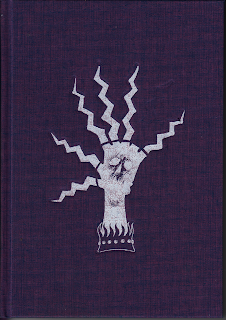
Who is the mysterious Gaub? Not even this book tells us; we only get to know him by way of a creepy hand with seven spindly, crooked fingers (including one that “does not, will not, and has not existed. Ever”). These charmingly named fingers (“The Finger Under the Floorboards”, “The Finger Gnawed to the Bone”, etc.) are associated with 49 spells, a handful of creatures, occult items, and magical phenomena. Mr. Gaub has certainly been around, and you can find his handywork in many unwholesome events. The setting around the hand of Gaub is a modern world of gloom, of deformities and medical horrors, of abandoned houses and sickening, miasmatic urban environments, of sadistic authority figures and reclusive malformities.

No Pain, No Gain
Most spells in The Book of Gaub are specific enough and weird enough to carry the premise of a whole adventure; and since each is accompanied by a small vignette of a story, many of them come with a basic idea sufficient for an adventure hook or at least element. Herein, we find spells such as “Perdivagrant” (all of them have strange, fanciful names), a spell that leads a lost company back to a known starting point, while travelling through strange and unsettling landscapes; “Pamphagous”, which evokes an insatiable hunger in the target that will probably lead to horrible consequences; “Orgiophant”, which results in a terrible proliferation of extra limbs on the hapless victim; or “Lichoscope”, a reanimation spell that only preserves the animated corpse while the caster keeps looking at it (much to the horror of the intellect now once again inhabiting it). As seen above, the spells become useful in specific situations you often need to set up carefully beforehand (not unlike the magic of Helvéczia), and many of them are closer to plot devices than direct utility magic. But on their own, they are creepy and highly imaginative. (Props to the authors and the editor for the consistent tone and unity of vision.)

The book is more than a simple grimoire. Each of the different fingers have associated occult paraphernalia: “a doll made of hundreds of burnt matches bound together” (will snuff out fires, but requires the owner to start fires or it will go and make one of its own); “a dull stethoscope that does not work” (but it will scream if used on an injured or diseased area); or “a ring of 2d6 skeleton keys” which will cause doors locked with them to disappear and leave behind a barren wall. There is a table for 100 magical catastrophes (which might result in the stars taking an unpleasant interest in the caster, a being of luminous beauty visiting during his or her next rest, or a premonition of being followed by something).

I was particularly impressed by the imaginative selection of monsters: the Corner Beast (whose glimpse you might just catch out of the corner of your eye, and whose presence is not registered by careless bystanders even if it kills), the Squeak (an enormous conglomerate of dead rodents resembling a rat king, eager to devour everyone in a house and identified by “too many mouse holes”), or the Dear Reader (this book-shaped monster not only reads YOU, it trades secrets in exchange for other secrets and blood). The monsters come with minimal stats, but useful descriptions describing not only their abilities, but their wants, the omens that betray their presence, and their use in occult stuff (for example, the Squeak can be fashioned into a handkerchief which can imbue liquids it is dipped into with potent, deadly rat poison). Finally, a collection of adventure hooks is also offered – maybe a bit hit or miss, but where they hit, they hit.

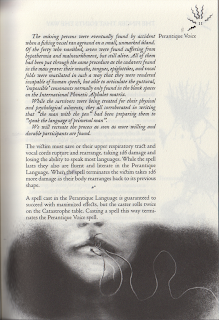
The Book of Gaub looks the part of an occult folio you might find in the seedier kind of bookstore, bound in sickening lilac cloth depicting The Hand as a creepy white impression, and supplemented with a bookmark. The paper is nice and the layout is quite elegant, a deliberate echo of the Arts & Crafts movement. Things are indexed and easy to reference. There are numerous illustrations of sickly and scurrying things, many of them reminiscent of Scrap Princess’ better work (although without the nightmarish intensity). Not only is the book pleasant to carry and read, but you can also use it as a prop of… itself. If I am allowed a parting shot: handy!

A Shrieking, Skittering Little Bundle of Love

Monday, 7 June 2021

[BEYONDE] Marcell Jankovics, Hungarian Animator

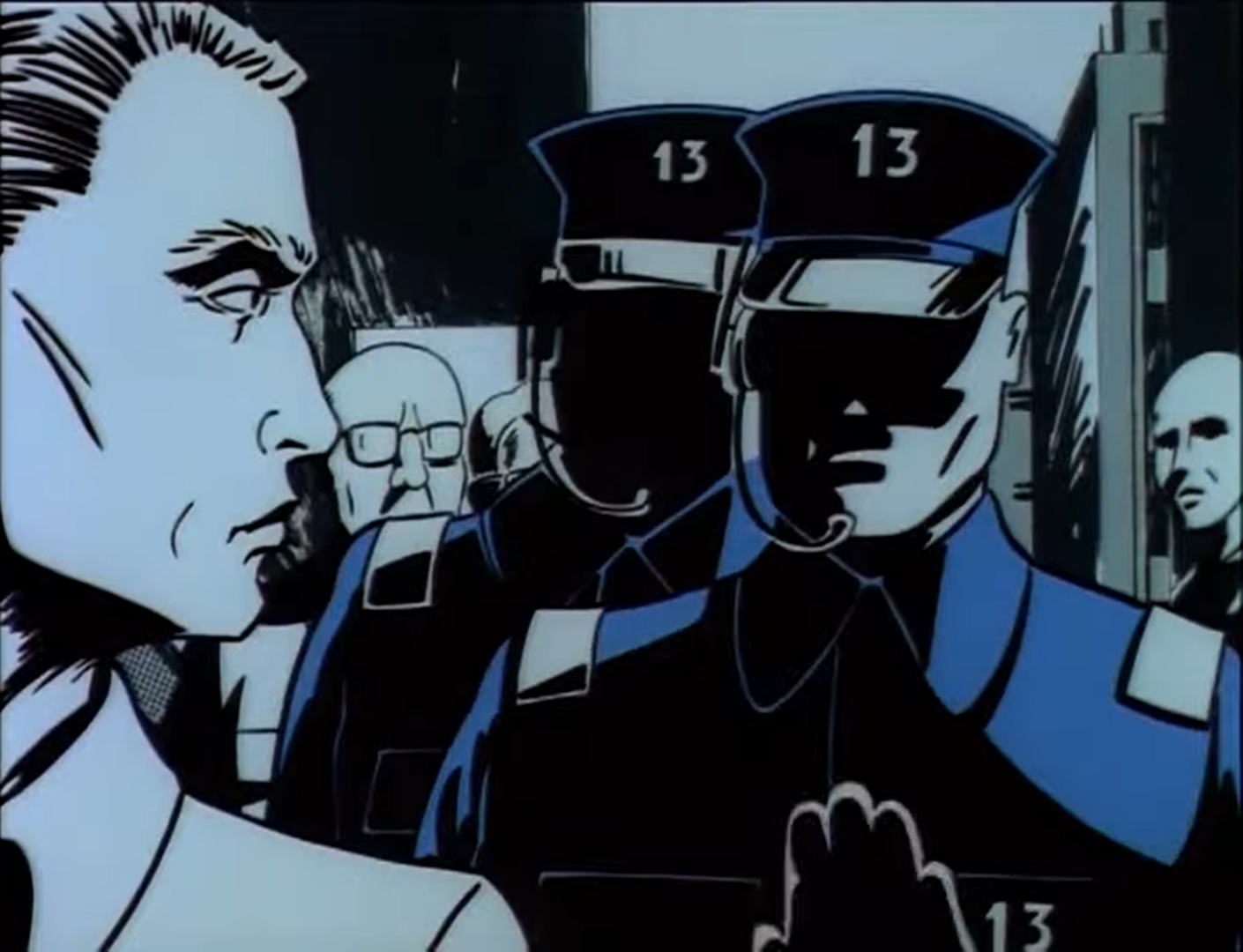
I came to praise Marcell Jankovics, not to bury him. After all, his visionary, psychedelic animation masterpiece, Fehérlófia [Son of the White Mare, 1981] is finally getting the US Blu-Ray treatment in a new, restored 4K edition, the sort of recognition it deserved many years ago. I already had part of this post written when I learned from the news that Jankovics was dead at the age of 79. The post, once a recommendation, had turned into an eulogy. We lose the greats, but at least this time, we have the work: the restoration (which Jankovics had closely overseen), the Blu-Ray, and – by incredible fortune – the finished version on Toldi, his final project, expected to debut in Hungary in late 2021, and worldwide somewhat later.

But first things first, Fehérlófia. If you are a fan of fantasy, myth, animation, or a combination of the three, this is a film you owe it to yourself to watch. Based on a Hungarian folk tale that exists in several variations, and is considered particularly archaic, this is a modern retelling of primordial myth, with bold visuals and heavy symbolism. It is a story of mythic heroes – archetypes – struggling with the forces of nature and an undefined evil. It is the story of Treeshaker, a great hero born of a white mare (who breastfeeds him for fourteen years, granting him sufficient strength to uproot trees); two mighty companions who are almost but not quite as strong (Stonecrumbler and Irontemperer); and their journey to the Mythical Underworld (really!) to defeat three dragons and rescue three princesses. It is a journey set against a backdrop of titanic forces of nature, archaic bestial horrors, and a world where simple human craft takes on the importance of religious ritual. The tale is universal: it is the tale of pre-historic, pre-modern man in his youth, finding his way in a dangerous and grand world. 


There are very few animations which look like Fehérlófia, and none that look exactly like it: Fritz Lang’s Die Nibelungen compares with its feverish visions and golden colours, and also with its modern yet deeply respectful treatment of its source material. Jankovics’ animation works with bold shapes and radiant colours. It is psychedelic, although without recourse to drug use: it aims to depict the unreal, and employs unreal visuals to this end. It is heavy with symbolism, from the spiritual to the psycho-sexual (of varying subtlety), and it is particularly rich in motifs taken from folk art: flowers and geometric patterns which shift, move and meld into each other; jagged shapes contrasted with flowing curves. There is a splendour to the film’s imagery, and it is a visual journey from start to finish. (Parenthetically, if you can’t obtain, or don’t want the Blu-Ray, there is a full, pre-restoration version with subtitles here: https://www.y outube.com/watch?v=Ohv88J2WKsg – link deliberately broken to safeguard it.)


Like most products of its time, the cartoon is laden with hidden meaning as well. In repressive cultural environments, art is filled with secret messages you have to decode to interpret properly. Well-known stories are used as vehicles to speak about current issues that cannot be spoken about in the open. Fehérlófia is a retelling of myth with a heavy use of symbols, but it is also an outraged, powerless cry about the devastation and wilful destruction of a society. The story’s setup, the White Mare’s flight from a mechanised an all-seeing terror, is easy to see as a vision of totalitarianism; the draconic chimeras fought by Treeshaker are embodiments not just of human vices, but also the more hateful aspects of over-consumption, modern warfare, and the faceless dread of the digital age. There is a haunting, mourning tone to the work that treats the age of myth as a distant echo, as something that has passed and shall never return. When the opening dedication reads, “In the memory of the Scythian, Hunnic, Avar, and other plains people”, the careful viewer knows that “other plains people” means “and Hungarian people”, past tense included. When the tale ends, with the customary “And they lived happily ever after, until they died” of Hungarian folktales, the “until they died” part seems to take on a peculiar significance.

Why did Jankovics see the world in apocalyptic tones, especially in the relatively permissive 1980s? Arch-pessimism is certainly the default stance of his works: in the bittersweet “happy ending” of Johnny Corncob, in the abstract shorts Sisyphus and The Struggle, and in his quixotic 28-year (1983 to 2011) journey to adapt The Tragedy of Man, Hungary’s grand 19th century play about the ultimate futility of history and human progress, to an animated movie. In Jankovics, personal experience met with the Hungarians’ baseline brooding nature. As a child of the 1940s, he was nine when his father, a member of the anti-nazi resistance, was arrested, tortured, and sentenced to lifelong forced labour on trumped-up charges; he was only released to go home to die. The point was not to punish a specific crime, but to humiliate and break what remained of the Christian middle class, and reallocate their belongings to regime loyalists: masses of families were deported with minimal belongings to the countryside for menial labour, and housed in chicken coops, pigsties and stables. Jankovics later studied at Pannonhalma, Hungary’s most ancient Benedictine school, the only one allowed to operate with heavy restrictions; in his class, the majority of pupils came from families where one or both parents were dead, in prison, or under police supervision. The students of this prestigious school could count on graduate to become outcasts from society. Jankovics’ applications for architect school were rejected year after year. It was clear he would never be allowed to obtain a higher degree. He worked various menial jobs to support himself, until Fortune, or perhaps Providence smiled on him: while he could not be an architect, he was hired as a phase animator for Pannonia Film, Hungary’s cartoon studio.

Of all inhabitants of an unhappy country that held the world record of per capita suicides and abortions, and whose inhabitants mostly died of preventable malaises much earlier than other, similarly developed states, children at least had it fairly good. The regime had exiled its undesirable authors, poets and playwrights into childrens’ literature; and the best artists of the time went on to produce amazing, literate works of art for the young generation. Pannonia was an isle of excellence in a system that pushed everyone into grey mediocrity; its director, while a party loyalist, was fairly reform-minded. Jankovics worked his way up through the ranks to direct shorts, and got his big break with Johnny Corncob (1973), a feature-length story of a young shepherd who becomes a hussar and a hero to win the hand of his love from an evil stepmother. Johnny Corncob was much influenced by George Dunning’s Yellow Submarine (you can spot the blue meanies if you look enough), but also began Jankovics’ lifelong infatuation with folk art and symbolism. The cartoon was a success, even on the international level. It was picked up by Hanna-Barbera for US distribution, and to the author’s colossal disappointment, put in a box and never shown to local audiences – raising the question whether HB had made a mistake, or was just trying to cheaply block overseas competition from its US markets.


It would be fair to say that Jankovics was to Hungary as Miyazaki is to Japan. In my childhood, he was one of the two giants of animation. Attila Dargay made Disney-style stories about cute talking animals (and well made ones, too – in this scene, you can even spot Yours Truly lording over various forest critters), while Jankovics made weirder and – at least on the level of subtext – mode adult fare. Around them were the lesser peaks of a golden age of animated films – from Zsolt Richly’s proto-Powerpuff Girls work in The Rabbit With the Checkered Ears; through my generation’s non-anime anime cult classic, Cat City; Gyorgy Kovasznai’s long-forgotten but recently restored, avant-garde Bubble Bath (which, unlike Fehérlófia, very much does involve hallucinogenic drugs); the Oscar-nominated The Fly (it is about politics, and its director got into serious trouble for it); and whatever the HELL Sandor Reisenbüchler was doing. But these two were at the top of the game – both great and prolific.

Me when I see a Twitter

For people my age, Jankovics’ most recognisable work is undoubtedly Hungarian Folk Tales, the long-running TV animation series (nine seasons from 1977 to 2011, 100 episodes). These shorts were collaborations with various other artists (particularly with dramaturgist Agnes Balint, the uncrowned queen of Hungarian child’s literature), but the vision bears the mark of the originator: they are abstract, economic in their animation style (for both stylistic and cost-cutting reasons), and the episodes each draw on the motifs and style of a specific Hungarian ethnographic region. As it tends to go, the first few seasons directed hands-on by Jankovics are superior in vision; the later ones are fun, but more conventional. As a kid, I accepted them at face value; it was on later rewatching that I discovered their excellence and visual power. In a great gift to international animation, the studio has made the episodes freely available on Youtube, in a dubbed version no less. It is easy to dig in at a random point, but as a starter, I can highly recommend:

S01E05: The Pork Pudding (comedy horror, featuring a black pudding mimic!)

S02E02: The Giant Tree (the local version of the well-known Jack and the Beanstalk story, featuring my favourite one of Jankovics’ decidedly non-reptilian dragons)

S02E03: The Princess, Three Pigs, and Three Birthmarks (cartoon nudity!)

S02E13: The Jackdaw Girls (eerie weird fantasy)

S03E01: Abeles-Kobeles (introducing a bunch of devils which look suspiciously like the blue meanies)


If the first half of Jankovics’ career was about projects which allowed him to hone his skills and develop his craft, much of the second half was dedicated to a single task: animating The Tragedy of Man, Hungary’s great 19th century “civilisation play”. “The Tragedy”, as it is often known, is a long, slightly ponderous, deeply philosophical and immensely quotable play spanning the history of human progress, from primitive man to modern capitalism, mankind’s future, and beyond. Featuring a striving Adam who wants to see mankind’s bold future, a mysterious Eve as an embodiment of femininity, and Lucifer in the role of the ultimate smartass cynic, it is very challenging to stage (there are relatively few players, but a tremendous amount of historical sets), but perfectly suited for the medium of animation with its grand visions and allegories.


Preliminary work on the Tragedy started in 1983, and actual animation began in 1988. The project would take almost thirty years to complete. Pannonia, once one of the world’s largest animation studios, crumbled and went to the dogs. The theft and plunder of public assets (mostly by former party insiders) would become more lucrative than creating capital-intensive cultural products; foreign investors and banks were disinterested in funding art. Animation was a profitable business, but the turnover was slow and initial investments were high. Everyone wanted to get rich overnight. Jankovics, who chafed under the restrictions of socialism, soon grew into a bitter critic of the new order. He wrote books on ethnography and solar myths, occupied himself with lesser projects, and filled positions in cultural policy (whose holders are always hated by the jealous beneficiaries), while trying to raise capital for newer and newer segements of his film. At one point, he worked on the early design stages of Disney’s Kingdom of the Sun, but the project was gutted and bowdlerised, and his work went unused. The Tragedy progressed. Corners were cut, which are more apparent in some scenes than others. In 2011, he was finally given a lump sum from the new conservative government to complete the film, on the condition that it be released without further delay.


An Old-School Revolution

The finished Tragedy of Man is a monumental 160-minute animation faithfully following the play’s 15 scenes, its philosophical poetry and its quips: what it adds is the visual dimension. This is a slower, statelier work than Fehérlófia, and it often animates ideas rather than things. Each scene in its historical journey uses a radically different animation style (some co-designed with colleagues). Egypt is seen as the two-dimensional flat world of tomb paintings (only the mighty Pharaoh is allowed to assume the third dimension), and Greece as figures on clay pottery. The Middle Ages follow the style of codex marginalia; the Modern age as engraved plates; and the carnivalesque Victorian scene in a Dickensian London as an ever-evolving tableaux of popular culture. By the play’s dystopian vision of a cold and rational future that destroys human endeavour in an age where mankind has exhausted its resources, we are in the realm of comic books. Against this are set the strivings of Adam, his longing to win the attentions of Eve, and his dialogue with Lucifer, “the ancient spirit of negation”. It is not as rawly inventive and powerful as Fehérlófia, and it starts rather slow – the first half-hour is the weakest section. It is the very definition of indulgent and pretentious. However, it has a grand sweep, and it is rich in a myriad small details, cultural citations, easter eggs, and subtle visual humour. It is not for everyone, but some will like it very much.


There is much of Jankovics’ legacy that points at unrealised plans: he published his ideas as picture books or turned them into book illustrations (Toldi, his yet-to-be-released swan song, is one that miraculously got made). At one point, he contemplated animating the Bible, a project that got to the stage of a painted animation screenplay, one finished episode, and a later art album in the style of Jodorowsky’s Dune. (A fairly crappy trailer is found here). Perhaps that was too much. It was certainly hubris. And yet, as the Lord tells an exhausted and dejected Adam at the end of the Tragedy: “I have told you, Man: strive on, and trust!”

* * *

Fehérlófia is now available for pre-order from Arbelos. Don’t miss it.